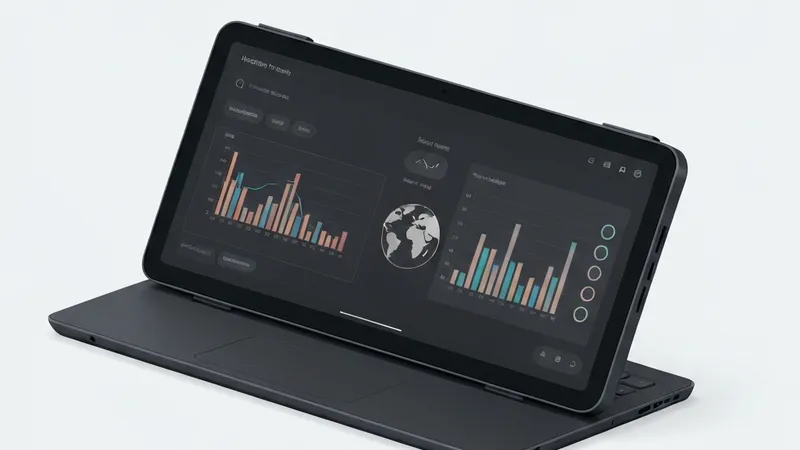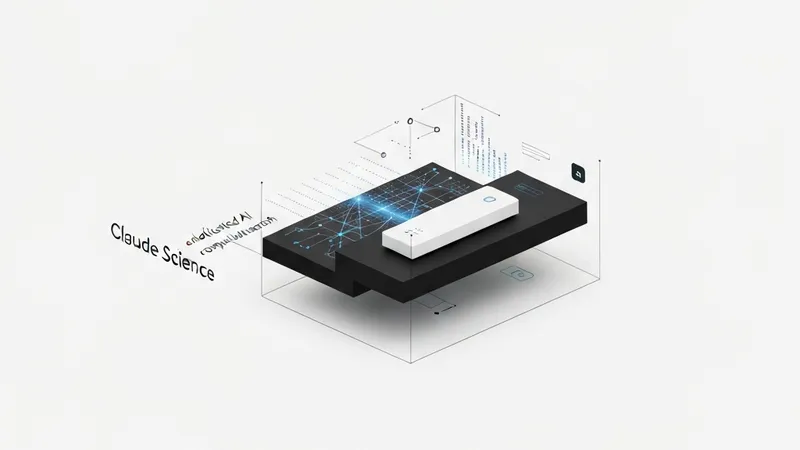
Anthropic on Tuesday introduced Claude Science, an AI workbench that provides scientists with a unified environment for computational research, eliminating the need to jump between databases, data pipelines, and miscellaneous tools.
To clarify, #Anthropic states that #Claude Science is "not a new AI model and not a more capable model for biology. It runs the same Claude models already available to everyone today (including Claude Opus 4.8), with no special access and no gating."
The workbench builds on Anthropic’s October 2025 launch of Claude for Life Sciences, which essentially augmented the Claude chatbot to make it better at life sciences tasks. Claude Science now serves as a dedicated, customized workspace to carry out that work.
This launch, announced at an "AI for Science" briefing, aligns with Anthropic’s broader strategy to transition from a pure model provider to owning the "operating layer" for specific industries, similar to how Claude Code has positioned itself in software development. Anthropic is increasingly betting its growth on vertical, workflow-level products rather than raw model capabilities, which could reshape how it competes and prices against its rivals.
Here is how it operates: A main AI assistant acts as a project manager for scientists. It connects to more than 60 scientific databases and features prebuilt toolkits for specific fields such as genomics, protein structure, and chemistry. This main assistant can spawn sub-assistants to delegate tasks, or hand off workloads to custom "expert" assistants built by the users themselves. Finally, a separate fact-checker AI double-checks citations and computations before anything is submitted for publication.
This verification step is crucial, as the rise of AI-assisted writing has led to fabricated citations and unverifiable statistics slipping into scientific papers. However, it is worth noting that this is still the underlying model grading its own homework rather than an independent source of truth.
To ensure reproducibility, Claude Science generates figures like 3D protein structures and chemical structures alongside the code that produced them. Each figure contains the "exact code and environment, a plain-language description of how it was created, and the full message history." Scientists can also edit these figures using natural language, prompting the agent to update the underlying code.
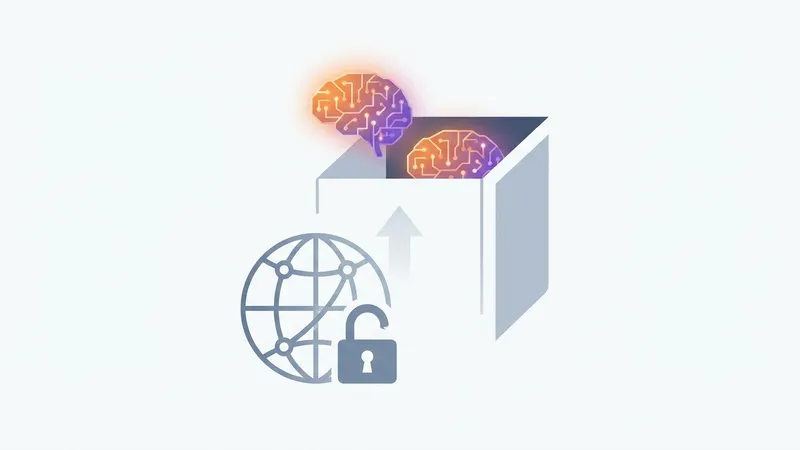
Another significant benefit is that Claude Science can run on a lab's own local infrastructure, allowing sensitive research data to stay within private environments instead of being sent to Anthropic's servers.
Early adopters are already leveraging the tool. Allen Institute neuroscientist Jérôme Lecoq used it to build a multi-agent computational review pipeline, while Stephen Francis's group at the UCSF Brain Tumor Center relied on Claude Science to accelerate comprehensive germline analysis of glioma to a fraction of the usual time.
[AgentUpdate Depth Analysis] Anthropic’s launch of Claude Science signals a pivotal shift in the LLM landscape from model-centric to workflow-centric value creation. In scientific research, the primary barrier to AI adoption has not been the model's raw intelligence, but rather the friction of tool integration, data sovereignty, and reliability. By establishing a hierarchical multi-agent framework (parent-child agent architecture) coupled with integrated fact-checking and local deployment capabilities, Anthropic is effectively building the specialized operating system for science. Compared to OpenAI's broader GPTs strategy, Anthropic's deep-vertical approach addresses the precise pain points of high-compliance industries. This vertical-operating-layer strategy not only secures high-retention enterprise customers but also illustrates how future AI Agents will transition from generic productivity helpers into highly structured, collaborative, and verifiable scientific reasoning networks.