During #Meta’s second-quarter earnings call, CEO Mark Zuckerberg shared that the company is utilizing Large Language Models (#LLMs) to dramatically accelerate its app development and testing cycle. Meta has recently launched a suite of standalone products, including Seller (for Marketplace sellers), Forum (for Facebook Groups), a new Instagram photos app, and an experimental AI bedtime story tool, with many more on the horizon.
Historically, Meta has struggled to build successful standalone apps outside its main family. In 2015, Meta shut down its internal incubator, Creative Labs, which produced failed experiments like Slingshot and Paper. Later in the early 2020s, its NPE Team tested over a dozen niche applications including Tuned and BARS, none of which managed to gain mainstream traction.
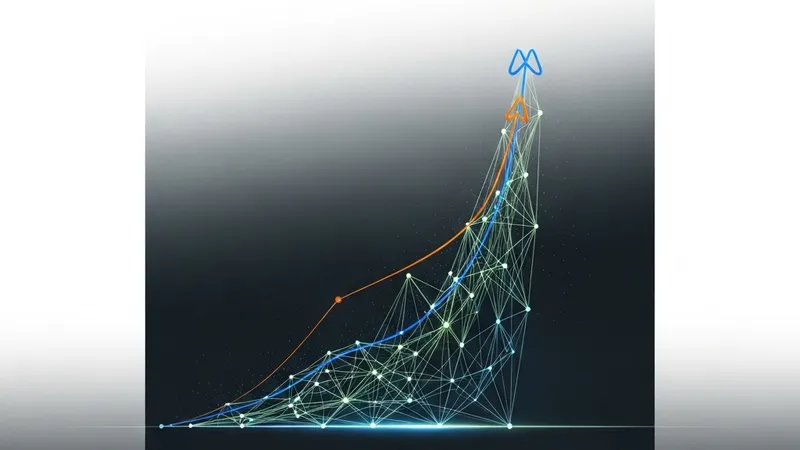
However, the paradigm is shifting thanks to generative AI and advanced recommendation systems. Zuckerberg emphasized that LLMs make it "a lot easier to ship new apps." Meta's latest hit, Threads, which has successfully scaled to 500 million monthly active users, serves as a prime example. The growth of Threads is not only driven by Instagram's massive user base but is also heavily accelerated by significant gains from AI-powered recommendation systems.
[AgentUpdate Depth Analysis] Meta's transition toward LLM-assisted rapid prototyping marks a pivotal moment in software engineering, transitioning from heavy-code approaches to adaptive, generative-first application development. By leveraging its open-source Llama model family, Meta builds a feedback loop where AI speeds up app synthesis, and advanced recommendations handle distribution. For the AI Agent ecosystem, this signals a shift from static interfaces to dynamic, agentic mini-programs. In the long run, we anticipate a future where AI Agents can autonomously assemble personalized micro-frontends on the fly based on user intent, transforming how consumer-facing AI products are scaled and disrupting traditional app distribution.