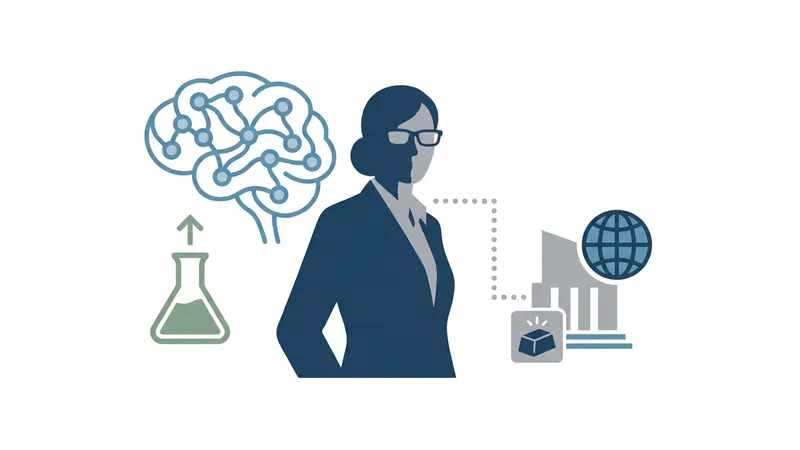
Miles Wang, an OpenAI researcher whose work includes leveraging AI to accelerate scientific and biological discovery, is reportedly departing the ChatGPT maker to launch a new startup. This venture will focus on developing AI models specifically for drug discovery, according to four sources familiar with his plans. Several other OpenAI researchers are also anticipated to join the new company.
Wang is currently in discussions to raise approximately $200 million at an impressive $2 billion valuation, as stated by two of the individuals. Lightspeed is reportedly in talks to lead this funding round. However, these discussions are ongoing, the deal is not yet final, and details could still change.
While Wang disputed the funding figures and the description of his company, he did not provide specific corrections. Lightspeed declined to comment on the matter.
These funding discussions underscore significant investor interest in applying AI to achieve breakthroughs in life sciences. Earlier this week, Chai Discovery, a two-year-old startup that develops AI models to predict molecular interactions for identifying new drugs, announced it had secured $400 million at a $3.8 billion valuation (its co-founder, Josh Meier, also previously worked as a researcher at OpenAI). Similarly, Google DeepMind spinout Isomorphic Labs, which also focuses on AI-powered drug discovery, raised a $2.1 billion Series B in May.
Multiple sources informed TechCrunch that Wang’s new startup might concentrate on creating AI models that can identify novel applications for existing drugs, and potentially even revive those that previously failed in clinical trials. Discovering new uses for FDA-approved drugs can dramatically shorten the time to revenue compared to developing entirely new drugs, as their safety profiles are already established.
Wang joined OpenAI in 2024 after dropping out of Harvard, where he was pursuing a bachelor’s degree in computer science. (In recent years, investors have shown renewed comfort in backing young founders who haven't completed college.) During his tenure at OpenAI, he co-authored research papers, including those evaluating how AI models can automate and accelerate scientific discovery回调。
[AgentUpdate Depth Analysis] #Miles Wang's departure from OpenAI to launch an AI drug discovery startup is a significant validation of the AI Agent ecosystem's potential in specialized domains. This venture aims to build AI models that function as autonomous agents capable of complex decision-making and execution in drug development. Unlike traditional research, which heavily relies on manual experimentation and expert intuition, these AI Agents can efficiently analyze vast biological datasets, simulate molecular interactions, and screen/optimize potential drug candidates in virtual environments. This initiative moves beyond single-function agents like AlphaFold (focused solely on protein structure prediction) towards more comprehensive, multi-modal collaborative Agent systems that cover target identification, compound synthesis, and activity prediction. It signals a shift where AI Agents evolve from mere assistive tools to becoming "virtual scientists" capable of end-to-end tasks. Such agents could autonomously design experiments, interpret results, and collaborate with human experts, drastically reducing drug development timelines and costs. For the broader AI Agent ecosystem, this expands application boundaries and demands higher standards for agent trustworthiness, interpretability, and robust multi-agent collaboration frameworks, pushing Agent technology towards deeper forms of emergent intelligence.