Anthropic Cybersecurity Skills is the largest open-source cybersecurity skills library designed to equip AI agents with the practical capabilities of a senior security analyst. Built on the agentskills.io standard, it features 754 production-grade skills across 26 domains, uniquely mapped to five major industry frameworks including MITRE ATT&CK and NIST CSF. Using a token-efficient progressive disclosure architecture, agents scan lightweight YAML frontmatter to discover relevant skills before loading detailed Markdown workflows for step-by-step execution.
A framework for few-shot evaluation of language models.
Local Deep Research is an AI-powered research assistant designed for deep, agentic research. It automates information gathering across web, academic papers, and user-owned documents using multiple LLMs and search engines, synthesizing findings into cited reports. The product emphasizes data privacy, local operation, and allows users to build and search their own encrypted knowledge base. It offers various research strategies and robust security features, ensuring user data control.
ai-agents-from-zero is a systematic, open-source practical guide for AI Agents and LLM application development. It offers a comprehensive learning path featuring step-by-step tutorials, runnable source code, an interview prep bank, and enterprise-level projects. Focusing on the Python ecosystem (including LangChain, LangGraph, and MCP), the project walks developers through real-world systems like NL2SQL-based 'Shopkeeper Agent' and multi-agent 'DeepSearch'. It bridges the gap between theory and landing production-ready AI applications.
Scrapling is an adaptive web scraping framework for the modern web. Its intelligent parser learns from website updates to automatically relocate elements. It features built-in bypasses for anti-bot systems like Cloudflare Turnstile and includes a robust spider framework for concurrent crawls with proxy rotation. It also provides an MCP server and an official OpenClaw Skill for seamless AI agent integration.
OmniVoice by k2-fsa is a state-of-the-art massively multilingual zero-shot Text-to-Speech (TTS) model, uniquely supporting over 600 languages. Leveraging an innovative diffusion language model-style architecture, it delivers high-quality speech generation with exceptional inference speed. Its core capabilities include industry-leading voice cloning, sophisticated voice design via attributes like gender, age, pitch, and accent, as well as precise control over non-verbal symbols and pronunciation correction. OmniVoice stands out for its extensive language coverage and rapid performance, making it an ideal choice for diverse applications in multilingual content creation, personalized voice synthesis, and real-time interactive systems.
ios-simulator-skill is a production-ready skill designed for Claude Code, optimized for building, testing, and automating iOS applications. It includes 22 scripts supporting Xcode project builds, testing, and result parsing via `xcodebuild`, as well as iOS simulator interaction via `xcrun simctl` and `idb`. This skill leverages semantic UI navigation and accessibility APIs to avoid fragile pixel-coordinate operations. It also significantly reduces AI agent token costs through token-efficient output and optimized screenshot compression, enhancing both efficiency and robustness.
OpenVoice is a versatile instant voice cloning model developed by MyShell.ai. It accurately clones reference tone colors and generates speech in multiple languages and accents. It provides flexible control over voice styles, including emotion, accent, rhythm, pauses, and intonation. OpenVoice V2, released in April 2024, enhances audio quality and offers native support for languages like English, Spanish, French, Chinese, Japanese, and Korean. Both V1 and V2 are MIT licensed for free commercial use, enabling zero-shot cross-lingual voice cloning and powering the instant voice cloning capability on the myshell.ai platform.
AI_NovelGenerator, developed by YILING0013, is a multifunctional novel generation tool built on large language models. It helps users efficiently create long-form stories by offering a visual Novel Setting Workshop for worldbuilding, character design, and plot blueprinting. The tool features intelligent multi-stage chapter generation, a state tracking system, a semantic search engine, and knowledge base integration to ensure plot coherence and logical consistency. It also provides a graphical user interface (GUI) and automatic proofreading to detect and resolve plot contradictions and logical conflicts.
The OpenAI Agents SDK is a lightweight yet powerful Python framework for building multi-agent workflows. It supports OpenAI APIs and over 100 other LLMs, enabling complex agent collaboration and task automation through core concepts like agents, tools, guardrails, and session management. Key features include agents as tools, sandbox execution, human-in-the-loop mechanisms, conversation history management, and built-in tracing, supporting the development of voice agents.
MAD (Multi-Agents-Debate) is an open-source framework exploring the collective debating capabilities of LLMs. It addresses the 'Degeneration of Thoughts' (DoT) issue—where self-reflection leads to biased or rigid outputs—by implementing a tit-for-tat interaction between multiple agents. By assigning roles like 'devil' and 'angel' to provide mutual external feedback, MAD corrects distorted thinking and breaks cognitive rigidity. It achieves significant performance gains in Counterintuitive QA and Commonsense Machine Translation tasks.
AI-Search-Hub by minsight-ai-info is an open-source AI Skill designed to aggregate the native search and web extraction capabilities of leading AI platforms like Gemini, Grok, Doubao, Yuanbao, and Kimi. It establishes an efficient, reusable information hub that resolves common data acquisition challenges such as crawler maintenance, platform anti-bot measures, and data cleaning. Users can perform "one query, whole-domain searches" to freely and efficiently gather diverse information, including tech trends, industry sentiment, and data from hard-to-reach sources like WeChat Official Accounts and Douyin. This hub empowers Agents and workflows to leverage major AI platforms' robust understanding and processing power, automating information collection, cleaning, and organization into structured outputs, significantly enhancing data acquisition efficiency and quality.
autoresearch by karpathy is a pioneering AI agent research tool designed to automate the exploration and optimization of Large Language Model (LLM) training. It empowers AI agents to autonomously modify model architecture, hyperparameters, and core training logic within `train.py`. Operating on a strict 5-minute training budget, the system evaluates improvements using `val_bpb` and iteratively refines configurations. Guided by human-programmed `program.md` files, autoresearch aims to discover optimal LLM setups on a single GPU, significantly accelerating frontier research and enabling efficient, unsupervised overnight experimentation.
Claude Code Usage Monitor is a real-time terminal monitoring tool developed by Maciek-roboblog, specifically designed for tracking Claude AI's token usage. It offers advanced analytics, machine learning-based predictions, and a rich user interface to help users monitor token consumption, burn rates, and cost analysis in real-time, while providing intelligent forecasts for session limits. The tool supports automatic detection of various Claude plans and custom limits, along with a multi-level warning system to prevent users from accidentally exceeding their usage quotas.
OpenHarness, developed by HKUDS, is an open-source, lightweight Python framework providing essential infrastructure for advanced AI Agents. Functioning as a comprehensive 'Agent Harness,' it equips large language models with robust tool-use capabilities (43+ tools), skill management, persistent memory, and sophisticated multi-agent coordination. Key features include parallel streaming agent loops, intelligent context compression, multi-level permission governance, and a flexible plugin ecosystem. OpenHarness empowers researchers and developers to deeply understand, experiment with, and extend production-grade AI Agents. Its capabilities are showcased by ohmo, an intelligent assistant for multi-day tasks like code generation and PR management across platforms such as Feishu and Slack, leveraging existing LLM subscriptions without extra API keys.
DeerFlow (Deep Exploration and Efficient Research Flow) is an open-source super agent harness developed by ByteDance, designed to orchestrate sub-agents, memory, and sandboxes to perform a wide range of complex tasks. It is powered by an extensible skills system, allowing for custom functionality integration. DeerFlow 2.0 is a ground-up rewrite, offering enhanced agent capabilities and flexible deployment, recommended for use with large language models such as Doubao-Seed-2.0-Code, DeepSeek v3.2, and Kimi 2.5. It also integrates BytePlus's InfoQuest intelligent search and crawling toolset.
Granian is a high-performance Rust HTTP server for Python applications, built on Hyper and Tokio. It offers a unified, correct implementation for HTTP/1 and HTTP/2 (with HTTP/3 planned), and comprehensive support for ASGI/3, RSGI, and WSGI application interfaces. Designed for streamlined deployment with a single dependency, Granian delivers exceptional concurrency and stable high throughput, particularly excelling with WebSocket connections. Featuring HTTPS, mTLS, and direct static file serving, Granian is an ideal choice for modern Python deployments demanding high performance and concurrency.
Fincept Terminal is a state-of-the-art financial intelligence desktop application developed by Fincept-Corporation. Built with pure native C++20, it leverages Qt6 for UI and rendering and embeds Python for advanced analytics, delivering Bloomberg-terminal-class performance in a single native binary. The platform offers CFA-level financial analytics, AI automation, and extensive data connectivity, supporting features like equity research, portfolio management, real-time news, and visual workflows.
caveman, developed by JuliusBrussee, is an agent skill/plugin designed to drastically reduce LLM output tokens by adopting a 'caveman-speak' style, while maintaining full technical accuracy. It cuts approximately 75% of output tokens and increases response speed by about 3x. It also features an input compression tool reducing input tokens by around 46%. The product supports various intensity levels (Lite, Full, Ultra, Wenyan mode) and provides specialized commands for terse commit messages and one-line code reviews.
Browser-Use is a powerful AI-driven browser automation tool that enables users to automate web interactions, data extraction, and complex tasks via natural language or Python code. It offers an open-source agent for local deployment and a more robust cloud agent service, featuring stealth browsing, proxy rotation, and advanced integrations to significantly enhance automation efficiency and accuracy.
MemPalace is a local-first AI memory tool designed to store conversation history verbatim and retrieve it through semantic search, without summarizing or paraphrasing. It utilizes a structured index, categorizing information into "wings," "rooms," and "drawers" to enable scoped searches. The retrieval layer is pluggable (ChromaDB by default), ensuring all data remains on the user's machine unless opted out. It achieves an impressive 96.6% R@5 raw recall on the LongMemEval benchmark, notably without requiring LLMs or API calls, showcasing high performance in a local environment.
VoiceFlow is an efficient Text-to-Speech (TTS) system based on Rectified Flow Matching, addressing the efficiency limitations of traditional diffusion models in speech synthesis. As the official implementation of its ICASSP 2024 paper, it generates high-quality mel-spectrograms by learning a continuous flow between noise and data. Through a flow rectification process, it further optimizes the sampling trajectory, achieving superior synthesis quality and efficiency with a limited number of sampling steps. It features Kaldi-style data organization, flexible training configurations, supervised duration modeling, and experimental voice conversion capabilities.
Agent Skills is an open, lightweight standard originally developed by Anthropic to extend AI agent capabilities with specialized knowledge and workflows. By packaging procedural instructions, scripts, and templates into structured directories, it enables cross-platform capability reuse. Using a 'progressive disclosure' mechanism (Discovery, Activation, Execution), agents can maintain a minimal context footprint while dynamically loading complex skills on demand.
Magika, developed by Google, is an innovative AI-powered file type detection tool leveraging deep learning for unparalleled accuracy. It uses a highly optimized, compact model (only a few MBs) to swiftly identify file types within milliseconds, even on a single CPU. Trained on a massive dataset of ~100 million samples across 200+ content types, Magika achieves an impressive ~99% average accuracy, excelling particularly with textual formats. Currently deployed at scale within Google for security and content policy routing across Gmail, Drive, and Safe Browsing, Magika also integrates with industry platforms like VirusTotal. Available as a command-line tool, Python API, and JavaScript/Go bindings, it offers robust, efficient, and flexible file identification for diverse applications.
Agent Lightning, developed by Microsoft, is a cutting-edge, framework-agnostic training platform designed to significantly optimize AI Agent performance with minimal code changes. It empowers developers to leverage advanced algorithms such as Reinforcement Learning, Automatic Prompt Optimization, and Supervised Fine-tuning, boosting the efficiency and robustness of agents built with any framework, including LangChain, AutoGen, or custom Python implementations. A core advantage is its ability to selectively optimize specific agents within complex multi-agent systems. Featuring a lightweight architecture, Agent Lightning provides a seamless path from initial deployment to continuous, algorithm-driven improvement, fostering the creation of powerful, adaptable, and highly controllable AI agents.
Maigret is a robust OSINT tool that collects comprehensive dossiers on individuals using only a username. It checks across 3,000+ sites and extracts data from profile pages without needing API keys. Key features include recursive searching for discovered IDs, advanced detection/bypass of censorship, and an AI analysis mode for summarizing investigations. It supports various report formats (PDF, HTML, JSON) and provides both a Web UI and an embeddable Python library for professional OSINT workflows.
RAG-Anything is an all-in-one multimodal RAG framework developed by HKUDS, built upon LightRAG. It addresses the limitations of traditional RAG systems in processing diverse content like text, images, tables, and equations. This comprehensive system offers end-to-end multimodal document processing, enabling seamless retrieval and querying across all content modalities through intelligent parsing, multimodal content understanding, and knowledge graph construction, eliminating the need for multiple specialized tools, including VLM-Enhanced Query capabilities.
Deep-Live-Cam is a real-time AI face swap and video deepfake tool developed by hacksider. It enables users to perform real-time face replacement and deepfake videos with just a single click and a single image. The tool is designed as a productivity asset for the AI-generated media industry, assisting artists in animating custom characters, creating engaging content, and facilitating clothing design. It operates by selecting a source face and a target image/video or camera, then initiating the real-time swap. It supports various platforms and GPU acceleration, and incorporates ethical checks to prevent the processing of inappropriate content.
LangChain is the leading agent engineering platform designed to simplify the development and deployment of applications powered by large language models (LLMs). It provides a robust framework for connecting interoperable components and vast third-party integrations, empowering developers to build sophisticated agents and LLM-driven applications. Key benefits include real-time data augmentation, guaranteed model interoperability, rapid prototyping, and production-ready features. Seamlessly integrated with LangGraph for advanced orchestration and LangSmith for observability, LangChain offers comprehensive end-to-end support for building high-performance, future-proof AI solutions.
TuriX-CUA by TurixAI is an AI-driven desktop automation agent that enables powerful AI models to perform real, hands-on actions directly on your desktop. It features a state-of-the-art computer-use agent (CUA), achieving an 80% success rate on OSWorld-style Mac benchmarks. TuriX is 100% open-source and free for personal and research use, allowing users to swap in their own models. The latest TuriX SuperPower combines CUA and CLI workflows for everyday office and coding automation, facilitating a continuous flow between GUI actions and CLI precision.
geo-seo-claude is a revolutionary AI Agent product engineered to optimize websites for the rapidly evolving AI-driven search ecosystem, encompassing platforms like Claude, ChatGPT, Perplexity, Gemini, and Google AI Overviews. It champions a "GEO-first, SEO-supported" strategy, designed to capture traffic migrating from traditional search to AI discovery while fortifying foundational SEO. The agent provides comprehensive functionalities including AI citability scoring, in-depth AI crawler analysis, cross-platform brand mention scanning, and llms.txt file generation. Leveraging parallel subagents for holistic GEO+SEO audits, it delivers professional, client-ready Markdown or PDF reports with prioritized action plans, ensuring digital assets remain competitive in the AI era.
AutoAgent by HKUDS is a cutting-edge, fully-automated, zero-code LLM Agent framework. It empowers users to build, deploy, and orchestrate complex LLM Agent systems purely through natural language, eliminating the need for any programming knowledge. Its core strength lies in intelligent agent construction, tool creation, and workflow generation, dynamically optimizing and adapting workflows based on high-level task descriptions. AutoAgent features a powerful “user mode” serving as an AI research assistant for information retrieval, complex analysis, and report generation, alongside “Agent Editor” and “Workflow Editor” modes for conversational customization of tools and agents. This significantly lowers the barrier to AI development, accelerating the deployment of intelligent applications across various industries.
Onyx is an open-source AI platform designed as the application layer for Large Language Models (LLMs), offering a feature-rich and easily deployable interface. It empowers LLMs with advanced capabilities such as Agentic RAG, deep research, web search, code execution, and file creation. Onyx supports over 50 indexing-based connectors and provides both Lite and Standard deployment modes. It also offers enterprise-grade features like collaboration, SSO, and RBAC, available in Community (MIT licensed) and Enterprise editions, deployable across various environments like Docker and Kubernetes.
tradingview-mcp is an advanced, AI-powered trading intelligence framework and MCP server, meticulously designed for real-time market analysis and high-confidence trading decision support across cryptocurrencies and stocks. It integrates over 30 professional technical indicators, a multi-strategy backtesting engine, live social media sentiment analysis, and deploys specialized AI agents (Technical Analyst, Sentiment & Momentum Analyst, Risk Manager) for collaborative judgment to generate high-confidence buy/sell signals. This open-source framework offers a rapid 5-minute deployment without requiring any API keys, ensuring broad compatibility with Claude Desktop and OpenClaw (supporting Telegram, WhatsApp, etc.), making it a powerful and cost-effective trading intelligence solution for individual investors and quantitative analysts alike.
Claude Code Templates is a comprehensive collection of ready-to-use configurations for Anthropic's Claude Code CLI. It features 100+ AI agents, custom slash commands, MCP integrations, and automation hooks accessible via aitmpl.com. Designed to streamline AI-powered development, it offers specialized agents (e.g., security auditors), one-line installation via NPX, and advanced tools like a real-time conversation monitor, session analytics, and environment health checks.
AI-Trader by HKUDS is a 100% fully-automated, agent-native trading platform, purpose-built to provide a dedicated financial market interaction environment for AI agents. It enables seamless, one-command integration for major AI agents like OpenClaw and nanobot, facilitating collective intelligent trading. Key functionalities include cross-platform signal synchronization, one-click copy trading, and universal market access spanning stocks, crypto, forex, options, and futures. A built-in reward system incentivizes signal publishing and following. AI-Trader empowers both AI agents and human traders with risk-selectable paper trading and copy services, fostering a collaborative, AI-driven financial ecosystem to significantly enhance market efficiency and intelligence.
The "openai-cs-agents-demo" is a customer service interface built upon the OpenAI Agents SDK. It features a Python backend for agent orchestration logic and a Next.js UI, powered by ChatKit, for visualizing the agent collaboration process and providing a chat interface. This demo showcases how a multi-agent system intelligently routes requests, handles complex tasks, and employs guardrails for relevance and jailbreak prevention. It serves as a practical foundation for developers to build extensible and transparent AI agent applications, particularly in customer support scenarios.
MoneyPrinter V2 (MPV2) is an application designed to automate the process of making money online. As the second iteration of the MoneyPrinter project, it has been completely rewritten with a focus on broader features and a more modular architecture. It integrates automated Twitter Bots and YouTube Shorts generators, utilizing CRON jobs for scheduled publishing. MPV2 supports Amazon affiliate marketing and Twitter promotion, while also assisting users in finding local businesses for cold outreach, aiming to enhance online earning efficiency through automation and streamline content creation and marketing activities.
graphify is a multimodal knowledge graph construction tool meticulously designed for AI Agents, deeply integrated within the Claude Code environment. It transforms diverse information sources—including code, documents, papers, images, and video links—into queryable, structured knowledge graphs, leveraging Claude Vision to intelligently extract core concepts and relationships. This tool dramatically enhances information retrieval efficiency, saving up to 71.5x tokens per query, and ensures cross-session graph persistence. With intelligent insights and automated synchronization, graphify empowers developers and researchers with efficient intelligent assistance and advanced knowledge management.
HelloGitHub is a professional monthly publication, updated on the 28th of each month, dedicated to curating and sharing interesting, entry-level open-source projects from GitHub. It covers a diverse range of content, including innovative projects, open-source books, practical applications, and enterprise-grade solutions. Our mission is to empower developers, especially beginners, to quickly discover the allure of the open-source world, lower the barrier to participation, and foster a deeper appreciation for open-source development.
mem0 is a universal intelligent memory layer engineered for AI Agents and assistants, empowering them with personalized and continuous learning capabilities. It seamlessly retains context and user preferences through multi-level memory (User, Session, Agent state). The innovative V3 memory algorithm integrates single-pass extraction, entity linking, and multi-signal retrieval, significantly boosting memory accuracy and recall, as evidenced by its leading performance on key benchmarks. mem0 offers developer-friendly APIs and cross-platform SDKs, making it ideal for applications like smart customer support and personalized assistants, enabling the creation of AI that deeply understands and adapts to user needs.
supervision is an open-source computer vision utility library developed by Roboflow, designed to streamline the development and deployment of CV applications through an efficient and reusable toolset. It boasts model agnosticism, seamlessly integrating with mainstream classification, detection, and segmentation models from frameworks like Ultralytics and MMDetection. The library offers a rich array of customizable annotators for clear and effective visualization of model outputs. Furthermore, it provides robust dataset management capabilities, supporting loading, splitting, merging, and converting data across various formats including COCO, YOLO, and Pascal VOC. supervision significantly enhances efficiency in data processing, model inference, and result presentation, making it ideal for real-time video stream analysis, object tracking, and behavioral analysis applications such as dwell time analysis and vehicle speed estimation.
daily_stock_analysis, developed by ZhuLinsen, is an intelligent stock analysis system powered by large AI models. It automatically analyzes selected A-share, Hong Kong, and US stocks daily, generating a 'Decision Dashboard' with core conclusions, ratings, buy/sell points, risk alerts, and action checklists. The system supports automated delivery of analysis reports via multiple channels including WeChat Work, Feishu, Telegram, Discord, Slack, and email. It integrates multi-dimensional analysis (technical, real-time quotes, chip distribution, news sentiment), supports global markets, and incorporates various built-in market strategies (e.g., moving averages, 'Chan Lun', Elliott Wave). Users can also utilize a web-based workbench for manual analysis, configuration management, historical report viewing, backtesting, and AI Agent-powered strategy inquiries.
AgentScope is a production-ready multi-agent framework designed to simplify the development of LLM-powered applications. It provides high-level abstractions for agent communication, memory management, and tool usage. Rather than using restrictive prompts, AgentScope leverages the inherent reasoning and tool-use capabilities of LLMs. Key features include Real-time Voice, Human-in-the-loop steering, Agentic RL for model tuning, and support for MCP and A2A protocols. It is engineered for scalability, supporting local, serverless, and K8s deployments with integrated OTel monitoring for enterprise-grade observability.
"free-llm-api-resources" is an open-source GitHub project curated by cheahjs that compiles a comprehensive list of large language model (LLM) API resources offering free access or trial credits. It details various service providers like OpenRouter, Google AI Studio, and NVIDIA NIM, along with their supported LLM models, API limits (e.g., request rates, token caps), and usage policies. The project strictly includes legitimate services and explicitly excludes reverse-engineered or non-legitimate resources, advocating for responsible use to preserve these valuable free offerings.
Claude How To by luongnv89 is a structured, visual, and example-driven guide designed to help users master Claude Code's features efficiently. It offers 10 tutorial modules, copy-paste configuration templates, Mermaid diagrams, and a guided learning path. The guide transforms users from basic Claude Code interactions to orchestrating advanced agents, hooks, skills, and MCP servers, addressing the gap in official documentation regarding practical guidance and a clear learning roadmap.
AbletonMCP integrates Ableton Live with Claude AI via the Model Context Protocol (MCP), enabling Claude to directly interact with and control Ableton Live. This integration facilitates AI-assisted music production, track creation, and Live session manipulation. It supports two-way communication, allowing AI to create and modify tracks, load instruments and effects, create MIDI clips, and control playback and session parameters, significantly enhancing the automation and intelligence in music creation.
Ragas, an open-source Python library developed by vibrantlabsai, is a comprehensive toolkit for evaluating and optimizing Large Language Model (LLM) applications. It aims to replace subjective and time-consuming assessments with data-driven, efficient evaluation workflows by offering objective metrics (both LLM-based and traditional), intelligent test data generation, and actionable insights. Ragas can automatically create diverse test datasets, seamlessly integrates with popular LLM frameworks like LangChain and major observability tools, and facilitates building feedback loops to continuously improve LLM apps using production data.
Pixelle-Video by AIDC-AI is an AI-powered fully automated short video engine. Users simply input a topic, and it automatically handles scriptwriting, AI image/video generation, voiceover synthesis, background music addition, and video compilation. Built on a modular design and ComfyUI architecture, it supports flexible customization and integration of various AI models, enabling video creation with zero barriers and no editing experience.
TradingAgents is a multi-agent Large Language Model (LLM) financial trading framework developed by TauricResearch. It simulates real-world trading firms by deploying specialized LLM-powered agents, including fundamental, sentiment, news, and technical analysts, alongside researchers, traders, risk management, and portfolio managers. These agents collaboratively assess market conditions and inform trading decisions through dynamic discussions. Built with LangGraph for flexibility and modularity, it supports various major LLM providers and features persistent decision logging and checkpoint resume, designed primarily for research purposes.
Google Gemma, developed by Google DeepMind, is a family of lightweight, state-of-the-art open-source large language models. Derived from Google's Gemini technology, Gemma offers various parameter sizes (1B, 4B, 12B, 27B) to cater to diverse applications, from edge devices to high-performance servers. It features robust multimodal understanding, supporting text and image inputs, and an exceptional 128K token context window. Designed for efficiency, Gemma runs smoothly on a single GPU or even personal laptops, significantly lowering the barrier for local deployment and development, making it ideal for lightweight applications, rapid prototyping, and AI deployment in resource-constrained environments.
Video-subtitle-remover (VSR) is an open-source AI-powered tool designed to remove hardcoded subtitles from videos without losing resolution. It utilizes advanced inpainting algorithms like STTN, LAMA, and PROPAINTER to detect text and seamlessly fill the erased areas. It supports automatic full-video removal, custom coordinate targeting, batch image watermark removal, and multiple hardware accelerations.
A comprehensive learning roadmap and resource curation for AI Agents. It guides users through 8 structured stages, from LLM basics to multi-agent orchestration. Featuring a dual-track approach—Track A for CLI power users and Track B for agent builders—it bridges the gap between theory and production. The project deeply explores the Claude Code ecosystem, including MCP, Skills, and computer use, supported by 145+ curated projects and 27 illustrative hands-on exercises.
PPT Master, developed by hugohe3, is an open-source AI tool that intelligently converts various document contents like PDF, DOCX, URLs, or Markdown into natively editable PPTX presentations. Operating locally via AI agents, it generates slides with real shapes, text boxes, and charts, rather than static images. The tool supports automatic page transitions, element animations, and can generate voice narration from speaker notes for video export, including personalized voice cloning. Its core value lies in ensuring high editability, local data processing, and transparent AI model usage costs.
AiPy is an AI Agent development framework meticulously crafted for the Chinese market, offering a localized and efficient alternative to OpenClaw. Built on Python and deeply optimized, it seamlessly aligns with the workflow and habits of Chinese developers. Its core strength lies in exceptional adaptation to native Chinese Large Language Models (LLMs), ensuring AI agents effectively understand and process Chinese contexts. AiPy also features seamless integration with mainstream domestic cloud platforms, significantly simplifying the building, deployment, and management of agent applications. It empowers developers to efficiently leverage China's unique AI ecosystem and cloud resources, accelerating AI innovation, especially for scenarios demanding localized AI infrastructure and data processing capabilities.
DeepTutor, developed by HKUDS, is an agent-native personalized intelligent tutoring platform. It integrates various AI agent modes like problem-solving, quiz generation, and deep research within a unified chat workspace. Key features include an AI Co-Writer for collaborative content creation, a Book Engine to transform materials into interactive "living books," and a Knowledge Hub for RAG-powered learning, all supported by persistent memory for evolving personalized guidance.
Anthropic's collection of intelligent agents, skills, and data connectors for the financial services industry, designed to accelerate core financial workflows such as investment banking, equity research, private equity, and wealth management. Available as a Claude Cowork plugin or via the Claude Managed Agents API, it assists analysts in drafting financial models, memos, research notes, and reconciliations. All outputs require human review and do not provide investment recommendations or execute transactions, focusing on augmenting professionals' analytical work with Claude's capabilities.
TradingAgents-CN is a multi-agent and large language model (LLM) based stock analysis and learning platform, specifically enhanced and localized for Chinese users. Built upon the Tauric Research TradingAgents framework, it offers a comprehensive localized learning center and supports data analysis for A-shares, Hong Kong, and US stocks. The platform features a modern web application with a FastAPI backend and Vue 3 frontend, utilizing MongoDB and Redis for high-performance data management. Its purpose is to help users systematically learn and research compliant AI-driven stock analysis and strategy experimentation using multi-agent frameworks and LLMs, strictly for educational and research purposes without providing live trading instructions.
The "AI Hedge Fund Simulation System" by virattt is an innovative proof-of-concept project exploring the application of AI in simulated trading decisions. This modular multi-agent system integrates the investment philosophies of 13 renowned investors, complemented by specialized agents for valuation, sentiment, fundamental, technical analysis, risk management, and portfolio management. It empowers users to generate trading signals, calculate intrinsic stock values, analyze market data, conduct risk assessments, and make simulated portfolio decisions. Designed solely for educational and research purposes, the system offers both command-line and web interfaces, supports multiple large language models, and features comprehensive backtesting capabilities, without executing any real trades.
CocoIndex is an open-source incremental indexing framework designed to provide continuously fresh context for AI agents and LLM applications. It processes enterprise data sources like codebases, meeting notes, and Slack messages through an incremental sync engine, only reprocessing the changes (Δ). This ensures AI agents always have up-to-date and reliable information for effective reasoning, eliminating stale context issues.
ProgramBench is a benchmark developed by facebookresearch designed to evaluate the capability of Language Models (LLMs) to rebuild programs from scratch. It challenges AI agents to architect and implement a complete codebase that reproduces the original program's behavior, given only a compiled binary and its documentation. This tool is crucial for assessing LLMs' performance in reverse engineering and code generation tasks.
CutClaw, an innovative AI Agent by GVCLab, revolutionizes long-form video editing through intelligent music synchronization. It meticulously analyzes hours of video footage and background music for rhythm, beat, and mood. CutClaw then autonomously crops, organizes video segments, and applies transitions, perfectly aligning vast amounts of video content with music. This core capability generates professional-grade, fluid, and rhythmic video productions, significantly simplifying the time-consuming synchronization tasks inherent in traditional video editing. Ideal for content creators, event videographers, or anyone needing to transform lengthy raw footage into polished, engaging, music-synchronized videos efficiently, CutClaw dramatically enhances production efficiency and content quality.
notebooklm-skill is a specialized extension for local Claude Code that enables direct interaction with Google NotebookLM via Patchright browser automation. It solves high token costs and hallucination issues associated with local RAG by offloading document synthesis to Gemini. Claude queries your notebooks programmatically to retrieve source-grounded, citation-backed answers from documents, repos, and videos, allowing for a seamless transition from research to implementation within the CLI.
Nanobot is an open-source, lightweight MCP host developed by the community, designed to simplify the creation of intelligent agents powered by the Model Context Protocol (MCP). It offers flexible deployment and seamless integration, enabling users to easily connect large language models like OpenAI and Anthropic with various MCP servers through intuitive configurations. Developers can swiftly build and manage AI agent applications supporting multi-modal interactions such as chat and voice. By providing a fully MCP-compliant platform, Nanobot significantly lowers the technical barrier for AI agent development, accelerating the innovation and deployment of sophisticated AI solutions.
Langflow is a versatile platform for building and deploying AI-powered agents and workflows. It features a visual builder interface for rapid prototyping, combined with built-in API and MCP servers for seamless integration. Supporting major LLMs and vector databases, Langflow allows multi-agent orchestration and conversation management. Developers can customize components with Python and use an interactive playground for testing. It’s designed to be enterprise-ready with observability integrations like LangSmith.
AI Berkshire is a value investing research framework compatible with Claude Code and Codex. It systematizes the methodologies of investment masters Warren Buffett, Charlie Munger, Duan Yongping, and Li Lu. The framework features 18 specialized skills covering deep research, earnings review, industry screening, and portfolio management. By running 4 parallel AI agents to challenge each other and utilizing Python-based financial verification, AI Berkshire delivers structured, unbiased, and actionable investment reports with explicit price zones rather than ambiguous analysis.
MiniMind is an ultra-lightweight open-source project designed to democratize LLM training by enabling users to build models as small as 64M from scratch. Developed natively in PyTorch, it aligns with the Qwen3 architecture and supports the full training pipeline, including Pretraining, SFT, LoRA, RLHF, and Agentic RL (GRPO/CISPO). It provides a 'white-box' learning experience, allowing reproduction on consumer GPUs at minimal cost. The ecosystem includes multimodal variants and reasoning capabilities, making it ideal for edge deployment and educational research.
GenericAgent is a minimalist, self-evolving autonomous agent framework with only ~3K lines of core code. Utilizing 9 atomic tools and a ~100-line Agent Loop, it grants any LLM system-level control over local computers, covering browsers, terminals, filesystems, keyboard/mouse input, screen vision, and mobile devices. Its design philosophy is to evolve skills rather than pre-loading them, automatically crystallizing execution paths into reusable skills after each task, fostering a personal skill tree that grows with use, all while being highly token-efficient.
GLM-OCR is a multimodal OCR model built on the GLM-V encoder-decoder architecture, specifically designed for complex document understanding. It integrates a CogViT visual encoder and GLM-0.5B language decoder, leveraging Multi-Token Prediction (MTP) loss and reinforcement learning to significantly boost training efficiency, recognition accuracy, and generalization. Achieving a SOTA score of 94.62 on OmniDocBench V1.5, GLM-OCR excels in handling formulas, tables, and information extraction. With only 0.9B parameters, it supports efficient deployment via vLLM and SGLang, offering low inference latency and optimized costs, ideal for high-concurrency and edge scenarios. Fully open-sourced with a comprehensive SDK, GLM-OCR ensures easy installation and integration for accurate and rapid document intelligence.
claude-obsidian is a self-organizing AI second brain and knowledge companion for Obsidian and Claude Code. Based on Andrej Karpathy's LLM Wiki pattern, it autonomously ingests sources, extracts concepts, and maintains a persistent compounding wiki vault. It features hybrid contextual retrieval, multi-writer safe locking, and supports major PKM methodologies like LYT, PARA, and Zettelkasten.
Kronos is the first open-source foundation model designed specifically for financial candlestick (K-line) sequences, trained on data from over 45 global exchanges. It utilizes a novel two-stage framework: a specialized tokenizer quantizes continuous, multi-dimensional K-line data into hierarchical discrete tokens, followed by pre-training a large autoregressive Transformer on these tokens. Kronos is built to handle the unique, high-noise characteristics of financial data, serving as a unified model for diverse quantitative tasks.
A production-ready orchestration system for Claude Code, featuring 185 specialized agents, 80 focused plugins, and 153 agent skills. It utilizes a granular architecture and progressive disclosure for optimal token efficiency. The ecosystem supports complex multi-agent workflows via orchestrators like Conductor and includes a rigorous quality framework, PluginEval. It enables intelligent automation across architecture, development, and infrastructure, also extending its 153 skills to Gemini CLI users.
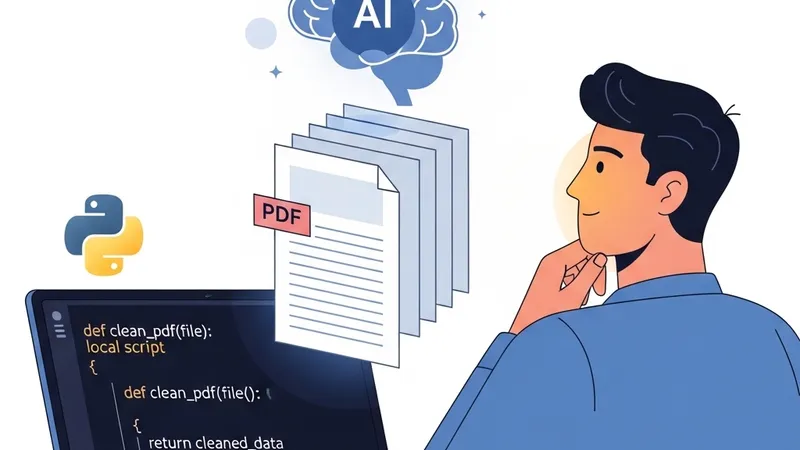
Hiring Agent is an open-source AI resume evaluation tool developed by HackerRank (Interviewstreet). It serves as an end-to-end resume-to-score pipeline that parses PDF resumes into Markdown and extracts structured data using local (Ollama) or hosted (Google Gemini) LLMs. The tool automatically enriches this data with the candidate's GitHub profile and top repository signals. Ultimately, it produces a fair, explainable evaluation report featuring category scores, evidence, bonus points, and deductions.
OpenSquilla is a token-efficient, microkernel AI agent designed for CLI, Web UI, and chat channels. At its core, an on-device model router (SquillaRouter) dynamically dispatches tasks to the cheapest compatible LLM (supporting over 20 providers like DeepSeek, Anthropic, OpenAI). Featuring persistent memory, a layered sandbox, web search, and local embeddings, it delivers identical tool dispatch, retries, and decision logging across all interfaces, maximizing efficiency within your budget.
A cross-platform decryption and monitoring tool for WeChat 4.x local databases. It extracts SQLCipher 4 keys from process memory and enables real-time message tracking via WAL files. Notably, it includes a built-in MCP Server, allowing Claude and other AI Agents to query WeChat messages, contacts, and voice transcripts. Features include rich media parsing, local Whisper transcription, and advanced image decryption (V1/V2), making it a core utility for the AI Agent ecosystem.
ARIS is an autonomous research workflow tool for machine learning, operating as a skill-based framework for agents like Claude Code, OpenClaw, and Cursor. It utilizes a unique cross-model adversarial architecture (Executor vs. Reviewer) to automate the entire research lifecycle—from idea generation and coding to paper writing and rebuttal management. Features include a persistent Research Wiki, self-evolution capabilities, and a zero-dependency Markdown-driven skill system, enabling high-quality academic output with minimal human intervention.
An AST-based semantic code search tool powered by the high-performance CocoIndex Rust engine. It provides precise code retrieval by understanding code structure rather than text snippets, reducing token usage by 70%. It integrates seamlessly as a Skill or MCP server for agents like Claude Code and Cursor. Featuring zero-config setup and support for both local and cloud embeddings, it enables efficient semantic search within CLI and modern AI coding environments.
fireworks-tech-graph is a professional diagram generation tool that converts natural language descriptions into publication-ready SVG and PNG diagrams. Designed for the AI/Agent ecosystem, it supports 14 UML types and specialized domain patterns like RAG, Multi-Agent orchestration, and Mem0 architectures. It features 7 pre-encoded visual styles (e.g., Claude/OpenAI aesthetics, Blueprint, Glassmorphism) and provides high-fidelity 1920px PNG exports. As a Claude Code Skill, it enables developers to visualize complex systems instantly without manual drawing or DSL syntax.
Agent-Reach is a scaffolding tool designed to equip AI Agents (e.g., OpenClaw, Claude Code, Cursor) with comprehensive internet capabilities. By automating the installation of various open-source CLI tools and MCP servers, it enables agents to bypass expensive APIs and paywalls to search and read content from platforms like Twitter, YouTube, Reddit, and Xiaohongshu. It functions as a standardized bridge, providing a local environment where agents can independently invoke upstream tools. It features privacy-first local cookie storage and includes a diagnostic command to ensure all data channels are functional.
Edict is an OpenClaw-based multi-agent collaboration architecture inspired by the ancient Chinese 'Three Departments and Six Ministries' system. It utilizes 12 specialized agents with strict role-based authorization. Unlike traditional frameworks, Edict features a mandatory institutional review mechanism that can reject unqualified outputs, preventing errors from executing. It includes a real-time Kanban dashboard providing full observability, allowing users to manually intervene in tasks, hot-switch LLM models, and review complete audit logs to eliminate the black-box nature of AI workflows.
TrendRadar is a lightweight, open-source hotspot assistant designed for rapid deployment. It aggregates real-time news via RSS and APIs, using AI for intelligent filtering based on natural language interests, automated translation, and trend summarization. It supports one-click notifications to over 9 platforms, including WeChat, Lark, and Telegram. With deep MCP (Model Context Protocol) integration, it enables AI agents to access and analyze live news data seamlessly, offering a professional HTML reporting interface and cross-platform notification adaptations.
CLI-Anything is a pioneering platform dedicated to seamlessly transforming any traditional software into "agent-native" tools, enabling direct and efficient control by AI Agents. By building flexible Command Line Interfaces (CLIs), it effectively bridges the gap between AI and the vast global software ecosystem, empowering agents like Pi, OpenClaw, and Claude Code to autonomously operate diverse applications. The central CLI-Hub offers a unified mechanism for discovering, installing, and managing community-contributed CLI harnesses across productivity, development, creativity, and gaming. With rigorous testing, multi-source installation support, and JSON/human-readable output, CLI-Anything empowers AI Agents to automate complex workflows and produce rich, real-world outcomes.
MiniCPM-V is a series of multimodal LLMs optimized for ultra-efficient edge-device deployment. Developed by OpenBMB, it excels in image and video understanding using intra-ViT early compression and LLaVA-UHD v4 technology, reducing visual encoding costs by over 50%. With only 1.3B parameters, MiniCPM-V 4.6 outperforms larger models while maintaining high token throughput. It supports seamless deployment across iOS, Android, and HarmonyOS, enabling real-time multimodal interaction on mobile platforms.
Paper2Code is a tool powered by PaperCoder, a multi-agent Large Language Model (LLM) system, designed to automate the generation of executable code repositories directly from machine learning scientific papers. It employs a three-stage pipeline—planning, analysis, and code generation—each managed by specialized agents. This method has shown superior performance on Paper2Code and PaperBench benchmarks, producing faithful and high-quality implementations, supporting both OpenAI API and open-source models via vLLM.
Agent S, developed by Simular AI, is an open-source framework enabling autonomous computer interaction via an Agent-Computer Interface (ACI). By pairing major LLMs with visual grounding models like UI-TARS, it translates natural language into precise mouse and keyboard actions. The latest Agent S3 features a local coding environment for Python/Bash execution and Behavior Best-of-N mechanisms. It demonstrates strong zero-shot generalization across platforms and is the first GUI agent to surpass human-level performance (72.60%) on the OSWorld benchmark.
This is an unofficial Chinese localized guide for Claude Code, forked and rewritten from the upstream project 'luongnv89/claude-howto'. It aims to help Chinese users progress from basic operations to mastering advanced Claude Code features, such as the combined use of slash commands, memory, skills, hooks, MCP, subagents, and plugins. The guide rephrases explanations, addresses common obstacles for Chinese users, and preserves key executable identifiers to ensure compatibility, providing a practical learning path for Claude Code.
nature-skills is a growing collection of Claude skills designed to produce academic work at *Nature*-journal standard. It currently covers workflows for generating scientific figures, polishing manuscript prose, preparing data availability statements, and transforming papers into presentations. The core philosophy dictates that all skill rules are derived from primary sources, such as published *Nature* papers, journal author guidelines, and structured writing curricula, ensuring the professionalism and accuracy of the output. These skills assist users in completing high-quality academic publishing tasks via predefined trigger keywords.
Khazix Skills is an open-source collection of AI skills and prompts developed by 'Digital Life Khazix' to enhance the utility and efficiency of AI agents. It includes structured skill instruction sets, compliant with the Agent Skills open standard, readily loadable by agents such as Claude Code, Codex, and OpenClaw. Additionally, it offers copy-paste prompts compatible with leading conversational models like ChatGPT, Claude, and Gemini. The collection provides practical functionalities such as automated document synchronization, in-depth research report generation, personalized writing styles, and AI hot news inquiry.
VoxCPM is a tokenizer-free Text-to-Speech system that directly generates continuous speech representations via an end-to-end diffusion autoregressive architecture, achieving highly natural and expressive synthesis. VoxCPM2, the latest 2B parameter model, is trained on over 2 million hours of multilingual speech data, supporting 30 languages, Voice Design, Controllable Voice Cloning, and 48kHz studio-quality audio output with built-in super-resolution.
awesome-llm-apps by Shubhamsaboo is a curated repository offering over 100 runnable AI Agent and RAG application templates. It serves as a practical cookbook of ready-to-use code, enabling developers to quickly clone, customize, and deploy production-grade LLM applications. It covers modern AI stacks like AI Agents, multi-agent teams, RAG, voice agents, agent skills, and fine-tuning. Each template is self-contained, original, end-to-end tested, supports various LLMs (Claude, Gemini, OpenAI, Llama, etc.), and comes with free step-by-step tutorials.
social-auto-upload is a powerful automation tool designed to help content creators and operators efficiently publish video and graphic content with one click to multiple domestic and international mainstream social media platforms, including Douyin, Bilibili, Xiaohongshu, Kuaishou, WeChat Channels, Baijiahao, and TikTok. The project features CLI access and a modular design, supporting video/graphic uploads, scheduled publishing, and platform expansion. It is currently undergoing a refactor to provide more stable and stealthy automation solutions, with deep integration for AI Agent tools like OpenClaw, facilitating automated content distribution.
Awesome Math is a curated list of high-quality mathematics resources maintained by rossant. It provides a comprehensive collection of free and open-access materials available online, organized by mathematical branches and resource types. The repository covers everything from foundational learning platforms and popular YouTube series to professional computational tools, encyclopedias, and advanced lecture notes. It serves as a community-driven roadmap for students, educators, and researchers to navigate the vast landscape of mathematical knowledge.
An advanced Xianyu management system built with FastAPI and Python 3.11+. It offers multi-account management, intelligent auto-reply (AI & keywords), automated digital goods shipping, and bulk product polishing. Featuring multi-user data isolation and Docker support, it leverages Playwright for robust browser automation, helping sellers automate repetitive tasks and maintain 24/7 responsiveness through an agentic workflow.
CloakBrowser is a stealth Chromium distribution modified at the C++ source level by CloakHQ. Instead of relying on fragile JS injections, it patches fingerprints (Canvas, WebGL, WebRTC, etc.) directly in the binary to bypass bot detection like Cloudflare Turnstile and reCAPTCHA v3. It features a unique 'humanize' mode for realistic behavioral simulation and serves as a drop-in replacement for Playwright and Puppeteer. It is an essential stealth environment for AI agents and automation frameworks requiring high-trust browser sessions.
A set of ready to use Agent Skills for research, science, engineering, analysis, finance and writing.
code-review-graph is an AI-assisted code review tool that builds a structural map of code using Tree-sitter and incrementally tracks changes to provide precise context to AI assistants via the Model Context Protocol (MCP). This approach significantly reduces token consumption by enabling AI models to read only the minimal set of files relevant to a change, rather than the entire codebase. It aims to solve the token waste problem in large repositories and monorepos, improving the efficiency and quality of AI code reviews.
Claude Code Telegram Bot is a remote access interface for Claude Code, enabling developers to interact with their codebases naturally from anywhere via Telegram. Eliminating the need for terminal commands, it offers an Agentic conversational mode alongside a classic CLI mode. Key features include automatic project session persistence, directory sandboxing, and strict authentication. It also supports event-driven automation, allowing developers to handle GitHub webhooks and scheduled cron jobs directly.
Remote Claude is a collaboration tool that seamlessly bridges terminal-based Claude Code/Codex processes with Feishu (Lark). Built on tmux for non-intrusive interaction, it allows developers to monitor progress, send commands, and grant permissions via mobile devices. With cross-device session sharing, it frees developers from their desks for ubiquitous AI programming.
Semble is a fast, CPU-only code search library by MinishLab designed specifically for AI agents. It efficiently retrieves relevant code snippets via natural language queries, reducing token usage by ~98% compared to traditional grep-and-read methods. Requiring no API keys, GPUs, or external services, it indexes and queries codebases locally in milliseconds, achieving near-transformer retrieval accuracy. It functions seamlessly as an MCP server for instant integration with Claude Code, Cursor, and other agent workflows.
PandaProbe is an open-source AI agent engineering platform by Chirpz AI that helps teams collaboratively trace, evaluate, monitor, and debug AI agents. It works by capturing full agent execution workflows—including LLM calls, tool usage, and custom logic—as granular traces. Featuring an asynchronous architecture backed by Redis and LiteLLM, it facilitates robust LLM-as-a-judge evaluations to track quality regressions. Offering both a freemium cloud tier and self-hosted Docker deployment, it integrates seamlessly with major agentic frameworks.
Browser Harness is a thin, self-healing CDP (Chrome DevTools Protocol) tool that connects an LLM directly to a real browser, granting agents complete freedom without rigid middleware frameworks. Its standout feature is self-improvement: during execution, the agent automatically writes missing helper functions on the fly and generates reusable, site-specific domain skills. Operating via a single WebSocket, it supports both local debugging and headless deployment, integrating seamlessly with Browser Use Cloud for stealth capabilities, proxies, and captcha solving.
AnySearch Skill is a unified real-time search engine skill designed for AI agents. It supports general web search, vertical domain search, parallel batch search, and full-page content extraction. The skill provides CLI scripts for Python, Node.js, PowerShell, and Bash, enabling agents to auto-detect and persist the optimal runtime environment. It offers out-of-the-box anonymous access, with an optional API key configuration for higher rate limits.
MLflow is the premier open-source AI engineering platform designed for Agents, LLMs, and ML models. It provides an end-to-end suite for teams to debug, evaluate, monitor, and optimize production-grade AI applications. Core features include OpenTelemetry-based observability and tracing, systematic evaluation with over 50 built-in metrics, prompt versioning and automated optimization, and a unified AI Gateway to manage provider routing, rate limits, and costs.
A comprehensive open-source AI engineering curriculum spanning 20 phases and 435 lessons. It teaches how to build AI algorithms from scratch using Python, TypeScript, Rust, or Julia before adopting production frameworks. Deeply integrated with the OpenClaw and agentic ecosystem, every lesson outputs deployable artifacts like Prompts, Agent Skills, and MCP Servers.
AutoResearchClaw is an autonomous research agent framework within the OpenClaw ecosystem that transforms research ideas into conference-ready papers. It features an end-to-end 23-stage pipeline covering literature review, hardware-aware sandbox experiments, and LaTeX drafting. Key capabilities include a Human-in-the-Loop (HITL) Co-Pilot system with 6 intervention modes, anti-hallucination citation verification, and self-evolving learning via MetaClaw integration. It supports various LLM backends and integrates with messaging platforms through OpenClaw.
HackingTool is an all-in-one hacking tool suite designed for security researchers and penetration testers. It integrates over 185 tools across 20 categories, including anonymity, information gathering, wireless attacks, web attacks, exploit frameworks, post-exploitation, mobile security, cloud security, and Active Directory. It supports Python 3.10+, offers intelligent search, tag filtering, tool recommendations, installation status, and one-liner installation, running on Linux, macOS, and Docker environments.
OpenMythos is an open-source, theoretical reconstruction of the Claude Mythos model. It implements a Recurrent-Depth Transformer (RDT) featuring three stages: Prelude, a looped Recurrent Block, and a Coda. By recycling layer weights multiple times within a single forward pass, it enables deep, continuous latent-space reasoning equivalent to implicit Chain-of-Thought without expanding parameter size. Supporting switchable MLA/GQA attention and sparse MoE, it guarantees training stability via dynamical systems constraints.
The Agent Governance Toolkit (AGT) is an open-source security middleware by Microsoft for autonomous AI agents. Acting as a deterministic execution kernel, it intercepts and evaluates every tool call, resource access, and inter-agent message against strict policies prior to execution. By completely bypassing prompt-based safety logic, it ensures sub-millisecond, hallucination-free enforcement. AGT brings zero-trust identity management, hardware-style privilege ring sandboxing, SRE capabilities, and an MCP security gateway. It seamlessly integrates with 20+ frameworks like LangChain, Semantic Kernel, and AutoGen to guarantee enterprise-grade safety and auditable compliance.
The Claude Code Plugins Directory is the official registry for extending Anthropic's terminal-based AI agent. It serves as a curated marketplace for both internal and third-party plugins built on the Model Context Protocol (MCP). By providing a standardized structure for slash commands, specialized skills, and agent definitions, it enables seamless integration of external tools and data into the Claude Code environment, allowing developers to build highly customized and automated engineering workflows.
video-use is an open-source video editing tool by browser-use, allowing users to edit videos by chatting with agents like Claude Code or OpenClaw. It processes videos efficiently using word-level audio transcripts and on-demand timeline visual composites instead of heavy frame decoding. Features include automatic filler-word and silence removal, auto color grading, audio popping elimination, custom subtitle burning, and parallel sub-agent animation generation, complete with a self-evaluation loop for quality assurance.
Free Claude Code is a lightweight proxy service designed to enable free usage of the Claude Code CLI and VSCode extension without requiring an Anthropic API key. It intelligently routes Anthropic API requests to various backend providers such as NVIDIA NIM (offering free tiers), OpenRouter, DeepSeek, LM Studio, llama.cpp, or Ollama. The proxy supports per-model mapping, thinking block parsing, heuristic tool parsing, and API request optimization, effectively reducing development costs and enhancing flexibility, while also supporting remote autonomous coding and diverse integration methods.
Honcho by plastic-labs is an innovative open-source memory library and managed service, purpose-built for developing stateful AI agents. It offers unparalleled compatibility across models, frameworks, and architectures, enabling agents to build and persistently maintain dynamic state for users, other agents, groups, and more. As a continual learning system, Honcho intelligently adapts to evolving entities over time, significantly boosting agent retention and user trust. Its core capabilities include robust application workflow management, comprehensive interaction history storage, and advanced reasoning to guide agent behavior. With intuitive natural language querying, sophisticated session context management, and efficient message search, Honcho empowers developers to create highly intelligent chatbots and deliver deeply personalized agent experiences.
Databricks AI Dev Kit is an open-source AI-assisted toolkit curated by Databricks experts. It equips AI assistants like Cursor, Claude Code, and Copilot with over 75 executable MCP tools, a core Python library, and Databricks-specific markdown skills to seamlessly build Spark pipelines, Unity Catalog jobs, and MLflow experiments within your editor or via the Visual Builder web app.
Deep Eye is an advanced AI-driven penetration testing and vulnerability scanning tool. It dynamically orchestrates over 10 AI providers (including OpenAI, Claude, and Ollama) to generate intelligent, context-aware attack payloads. Equipped with 45+ vulnerability scanners, it targets flaws like SQLi and XSS by leveraging a RAG-indexed CVE intelligence database. Deep Eye features automated AI triage for false-positive filtering, WAF challenge bypasses, and generates professional, compliance-mapped bug bounty reports.
Robin is an AI-powered Open-Source Intelligence (OSINT) tool designed for dark web investigations. Integrating LLMs with Tor-based web scraping, Robin automates the discovery, filtering, and analysis of hidden services. It works by taking an initial query, using an LLM to refine it with dark web-specific keywords, and scraping search engines anonymously via Tor. Finally, AI is used to evaluate relevance and generate comprehensive investigation summaries. It features a Web UI and supports various models.
FastAPI is a modern, fast (high-performance) web framework for building APIs with Python, based on standard Python type hints. Standing on the shoulders of Starlette for web handling and Pydantic for data validation, it achieves performance on par with NodeJS and Go. FastAPI significantly boosts development speed by 200% to 300% while reducing human-induced bugs. Its core design natively supports asynchronous programming and provides automatic, interactive API documentation out-of-the-box. Fully compatible with OpenAPI and JSON Schema standards, FastAPI offers excellent editor support with auto-completion everywhere, making it intuitive, robust, and production-ready.
An educational project by shareAI-lab focused on 'Harness Engineering' for AI agents. It provides a masterclass by reverse-engineering the architecture of Anthropic's Claude Code. The repo teaches how to build the 'vehicle' (harness) for the 'driver' (model), covering essential mechanisms like tool implementation, context compression, subagent spawning, and task dependency graphs. It shifts the development focus from prompt plumbing to building robust environments for autonomous models.
stable-worldmodel is an open-source platform by galilai-group designed for reproducible world model research and evaluation. It provides a unified interface across three key stages: data collection, training, and model-predictive control (MPC) evaluation. Shipping with high-performance data format registries (like LanceDB) and common baselines (e.g., LeWM, DINO-WM), it streamlines model development. It also integrates a vast suite of standardized environments with customizable factors of variation, enabling effortless zero-shot generalization testing for robotics and control tasks.
Knowledge Work Plugins is an open-source collection by Anthropic built for Claude Cowork and Claude Code. These plugins bundle domain-specific skills, slash commands, sub-agents, and Model Context Protocol (MCP) connectors to transform Claude into a specialist for roles like sales, finance, legal, and product management. Utilizing a no-code, file-based architecture (Markdown and JSON), teams can easily customize AI workflows and seamlessly integrate them into their unique corporate tool stacks and processes.
A highly robust, GPU-accelerated contact solver for physics simulations involving shells, solids, and rods, developed by ZOZO, Inc. Operating entirely on the GPU using the Finite Element Method (FEM), it ensures penetration-free resolutions and scales to handle over 180M contacts. It offers immense ecosystem utility with out-of-the-box Windows executables, Docker deployments, JupyterLab integration, and a Blender add-on. Notably, it includes native MCP support, enabling Large Language Models to run and orchestrate simulations via natural language.
pyVideoTrans is an open-source tool dedicated to video translation, audio transcription, AI dubbing, and subtitle generation. It seamlessly converts videos into another language using an automated pipeline: Speech Recognition (ASR), Subtitle Translation, Speech Synthesis (TTS), and video-audio synchronization. Key features include speaker diarization and zero-shot voice cloning. It offers extensive compatibility with both local offline models and mainstream cloud APIs. Featuring an interactive GUI for manual proofreading and a headless CLI for batch deployment, it provides a highly flexible solution for multimedia localization.
Ouroboros is a local-first Agent OS for AI coding that transforms non-deterministic agent tasks into replayable, specification-first workflows. Replacing ad-hoc prompting, it implements a structured evolutionary loop: Socratic interview to expose assumptions, immutable seed crystallization, double-diamond execution, and evaluation. It integrates seamlessly with CLI tools like Claude Code, GitHub Copilot, and Gemini via MCP, featuring a 3-stage automated evaluation gate to ensure verified codebases.
Hands-On-AI-Engineering by Sumanth077 is a curated collection of practical, production-ready AI projects spanning LLMs, multimodal models, OCR, RAG, and AI agents. Emphasizing 'learn by doing', it provides complete code and setup guides supporting multiple model providers. Notably, it features Eagle Eye, a GitHub PR review agent built with OpenClaw and MCP, making it an excellent resource for building real-world AI applications.
MoneyPrinterTurbo is an end-to-end automated short video generator. By simply providing a keyword or theme, the tool automatically generates scripts, sources high-quality footage, synthesizes voiceovers, adds subtitles, and mixes background music. Built with an MVC architecture, it offers both a Web UI and API support. It integrates with major LLMs like OpenAI and DeepSeek, supports various video dimensions (9:16/16:9), and utilizes copyright-free materials. It's designed for creators to batch-produce content via local or Docker deployment.
oMLX is a high-performance local LLM inference server optimized specifically for Apple Silicon Macs. Built on the MLX framework, it supports text LLMs, VLMs, OCR, and embedding models. It features a unique Tiered KV Cache system (Hot RAM + Cold SSD) that persists context across requests and server restarts, making it ideal for coding agents like Claude Code. oMLX provides a native macOS menubar app and a web dashboard, supporting continuous batching, automated memory management via LRU eviction, and seamless MCP integration.
Awesome Harness Engineering by ai-boost is a curated collection of resources, patterns, and templates dedicated to building reliable AI agent harnesses. It focuses on the essential scaffolding—including context delivery, tool interfaces, MCP, sandboxes, memory systems, and verification loops—that surrounds an AI model. This repository guides developers in designing robust agent environments to bridge model limitations and ensure success in real-world, long-horizon tasks.
Agent-Reach is a scaffolding tool developed by Panniantong that instantly equips AI agents like OpenClaw, Claude Code, and Cursor with comprehensive internet capabilities. It automatically installs and configures underlying CLI tools and MCP servers, enabling agents to read web pages, perform web searches, and extract data from platforms like Twitter, Reddit, Xiaohongshu, Bilibili, and YouTube. It is completely open-source, free, plug-and-play, and prioritizes local privacy.
CDP Bridge MCP is a bridge service that connects MCP clients with real browser sessions. Using an accompanying Chromium extension, it enables LLMs and Agents to seamlessly read tabs, scan optimized DOMs, execute JavaScript, take screenshots, and navigate within the user's active browser. It reuses existing login states and cookies without requiring re-authentication. It also supports concurrent multi-profile operations and isolated multi-user access, making it ideal for web collaboration, automation, and Agent development.
xiaohu-video-translate is an AI coding agent skill (compatible with OpenClaw, Claude Code, etc.) that converts foreign-language videos into Chinese-subtitled videos and clean transcripts via a single natural language command. It automates downloading, audio extraction, local Whisper transcription, AI translation, and subtitle burn-in. It features zero transcription API costs, offline capability, and highly accurate word-level timestamps, delivering polished bilingual or pure Chinese subtitles seamlessly.
RedditVideoMakerBot is an open-source, fully automated video generator created by elebumm and TMRRW. Designed for producing viral Shorts, TikToks, and Instagram Reels, it operates entirely through programming magic without requiring manual video editing. The tool leverages Python and Playwright to scrape Reddit threads, synthesizes text-to-speech (TTS) audio, and seamlessly mixes them with background footage (like Minecraft gameplay) and background music. Key features include custom subreddit targeting, voice customization, light/dark mode UI toggles, and automatic NSFW post filtering.
seo-audit-skill is a reusable Agent skill for single-page SEO auditing. Built on a Script + LLM two-layer architecture, Python scripts handle deterministic factual checks (e.g., HTTP status, XML parsing), while the LLM manages semantic judgments (e.g., keyword intent, content quality). Simply provide a URL to receive a structured HTML report with prioritized actionable findings. It works seamlessly with Cursor, Claude Code, and any agent runtime supporting SKILL.md.
A collective list of free APIs
Voice-Pro is a state-of-the-art, AI-powered web application designed for comprehensive multimedia processing, serving as a robust open-source alternative to ElevenLabs. Accessible via a Gradio interface, it seamlessly integrates YouTube video downloading, voice separation, and top-tier speech recognition using the Whisper model family. Its standout feature is zero-shot voice cloning powered by F5-TTS, E2-TTS, and CosyVoice, combined with instant translation and multilingual TTS supporting over 100 languages. Recently made completely free and open-source, Voice-Pro empowers creators, researchers, and developers to process audio efficiently via local desktop deployment, especially optimized for Windows with NVIDIA GPUs.
This project is a complete, from-scratch implementation of a Transformer language model using pure PyTorch. Built upon the 'Attention is All You Need' architecture, it enables users to pretrain million- to billion-parameter LLMs. It features a fully hand-written modern post-training and alignment pipeline, including SFT, Reward Model, PPO, DPO, and GRPO algorithms, bypassing high-level wrappers. It also includes a Streamlit UI for training, evaluation, and chatting.
Meta-Harness is a framework developed by Stanford IRIS Lab for automated search and end-to-end optimization of task-specific model harnesses—the code surrounding a base model that manages storage, retrieval, and context. It automates the discovery of optimal scaffolding and memory systems using proposer agents (like Claude Code) to iteratively refine harness code, as demonstrated in text classification and Terminal-Bench 2.0 experiments.
Crawl4AI is an open-source, LLM-friendly web crawler and scraper that converts web pages into clean, structured Markdown for RAG, agents, and data pipelines. It features LLM-driven structured extraction, dynamic crawling, stealth mode, session management, and a Dockerized API server, making large-scale web extraction highly efficient and cost-effective.
Hello-Agents is a systematic educational project by Datawhale dedicated to building AI Native Agents from scratch. It bridges the gap between basic LLM theory and practical implementation, covering classic paradigms like ReAct, Plan-and-Solve, and Reflection. The project features a self-developed lightweight framework, 'HelloAgents', and provides deep dives into advanced topics such as Memory, Context Engineering, MCP (Model Context Protocol), and Agentic RL. Through real-world cases like travel assistants and cyber towns, it empowers developers to master the full lifecycle of designing, training, and deploying multi-agent systems.
Unlimited-OCR is an open-source, high-performance document parsing model released by Baidu, designed to advance DeepSeek-OCR into the era of one-shot long-horizon parsing. It supports single-image, multi-page, and PDF document parsing with dual configurations: 'gundam' (crop mode) and 'base'. Fully integrated with high-efficiency inference engines like vLLM and SGLang, it delivers exceptional throughput and accuracy for enterprise-level document digitization.
Odysseus is a self-hosted, privacy-first AI workspace designed to offer an experience similar to ChatGPT and Claude but running entirely on your own hardware. It features robust capabilities including chat with local or API models, autonomous agents with tool access (MCP, opencode), multi-step deep research, blind model comparison, and AI-assisted document editing. Additionally, it integrates a persistent memory and skills system via ChromaDB, an AI-triaged email client, and a 'Cookbook' for automated local model deployment.
Vibe-Trading is an open-source personal trading AI agent developed by HKUDS. It utilizes a connector-first architecture to seamlessly integrate traditional and crypto brokers like IBKR, Robinhood, and Binance, providing capabilities from data fetching to mandate-gated order execution. Key features include Model Context Protocol (MCP) support, multi-agent Swarm orchestration, a Research Goal runtime for long-term tasks, and strict backtest benchmarking. It ensures secure trading via built-in safety guards like a filesystem kill switch and execution mandates, offering interactive CLI, Web UI, and REST API interfaces.
Hermes Agent, developed by Nous Research, stands as a revolutionary self-improving AI agent. Its unique built-in learning loop empowers it to autonomously create and refine skills, persistently recall knowledge across sessions, and construct a progressively deeper understanding of the user. Offering unparalleled model flexibility, it seamlessly integrates with over 200 large language models via OpenRouter and others. With a robust terminal interface and broad messaging platform integration (Telegram, Discord), Hermes Agent facilitates scheduled automations, intelligent delegation to sub-agents, and offers flexible deployment options from VPS to serverless infrastructure. It's a comprehensive, adaptive, and research-ready AI companion designed for cutting-edge personalized intelligence.
Open-LLM-VTuber is an open-source, voice-interactive AI companion featuring real-time conversations, visual perception, and dynamic Live2D avatars. Operating fully offline on Windows, macOS, and Linux, it ensures absolute privacy. It provides both web and desktop clients, including a unique transparent background desktop pet mode. Integrating various LLMs, ASR, and TTS solutions, it allows for deep customization of your AI companion's persona, voice, and appearance.
HexStrike AI is an advanced MCP server that empowers AI agents like Claude and GPT to autonomously execute penetration testing and cybersecurity workflows. It seamlessly bridges LLMs with offensive capabilities by integrating over 150 security tools and 12+ autonomous agents. Powered by an intelligent decision engine, it dynamically analyzes targets, selects optimal testing strategies, orchestrates multi-step attack chains, and generates real-time visual vulnerability reports.
whichllm is a CLI tool that auto-detects your hardware to recommend the best HuggingFace LLMs that actually fit and run efficiently. Rather than just finding the largest model that fits in VRAM, it intelligently ranks models using real benchmark scores, quantization penalties, and estimated inference speed. It also features GPU simulation, reverse hardware planning, one-command chat execution, and Python snippet generation.
authentik is an open-source Identity Provider (IdP) built for modern Single Sign-On (SSO). Supporting SAML, OAuth2/OIDC, LDAP, and RADIUS, it allows organizations to securely unify and manage identity. It features a highly customizable flow builder for custom authentication, enrollment, and MFA stages, making it scalable from small home labs to large enterprise clusters.
No fortress, purely open ground. OpenManus is Coming.
SIA (Self-Improving AI) is an open-source framework designed to autonomously improve AI performance on benchmark tasks through an iterative loop. It operates by coordinating three main agents: a Meta-Agent that creates a task-specific Target Agent, the Target Agent that executes tasks and records logs, and a Feedback Agent that reviews performance to refine and update the Target Agent. SIA features a live web dashboard to visualize generations, supports multiple LLM providers including Anthropic, OpenAI, and Gemini, and seamlessly integrates with custom datasets like MLE-Bench competitions.
🚀 AI 全自动短视频引擎 | AI Fully Automated Short Video Engine
aisuite is a lightweight Python library by Andrew Ng's team that simplifies building with LLMs. It provides a unified Chat Completions API across multiple providers (OpenAI, Anthropic, Google, Ollama, etc.) and a robust Agents API with prebuilt toolkits, policies, and native Model Context Protocol (MCP) support. It also features OpenCoworker, a desktop AI coworker that automates everyday tasks, reads files, and generates reports locally or via APIs.
OpenMontage is the first open-source, agentic video production system designed for AI assistants and agents. It transforms plain-language prompts into fully produced videos by automating research, scripting, asset generation, editing, and rendering. By leveraging free stock archives or generating motion clips via APIs, it compiles videos into structured timelines using Remotion or HyperFrames. Fully optimized for agentic workflows, it features automated multi-point self-review and score-based provider selection.
LongCat-Video
Unstract is an open-source platform by Zipstack that leverages LLMs to extract structured JSON data from unstructured documents like PDFs, images, and scans. It allows users to define extraction schemas using natural language prompts in its 'Prompt Studio' and deploy them as REST APIs or ETL pipelines. It features Model Context Protocol (MCP) server support, n8n integration, and broad compatibility with major LLM providers, vector databases, and data warehouses.
MediaCrawler is a multi-platform social media data crawler supporting platforms like Xiaohongshu, Douyin, Kuaishou, Bilibili, and Weibo. Utilizing the Playwright browser automation framework and CDP mode to retain login sessions, it dynamically extracts signature parameters through JS expressions to bypass complex reverse-engineering. The Pro version introduces advanced AI capabilities, supporting direct integration as an AI Agent skill with toolkits like OpenClaw.
DocsGPT is an open-source AI platform by arc53 for building intelligent agents, assistants, and enterprise search. It features a visual Agent Builder, deep research tools, and comprehensive document analysis for formats like PDF, Office, web, and audio. Supporting both cloud APIs and local models (like Ollama), DocsGPT provides secure, private deployment options alongside rich integration capabilities and hallucination-free QA with citations.
An open-source repository maintained daily by the Pitt Computer Science Club and Simplify to share and track Summer 2027 tech internships across software engineering, data science, AI/ML, quantitative finance, and hardware engineering. It aggregates opportunities from both community submissions and Simplify's automated hourly web scrapers. Users can discover, filter, and apply to roles early to maximize their success.
NVIDIA NeMo Speech is an open-source toolkit built for researchers and PyTorch developers working on Automatic Speech Recognition (ASR), Text-to-Speech (TTS), and Speech LLMs. It enables efficient creation, customization, and deployment of conversational AI models by leveraging pre-trained checkpoints and modular PyTorch components. Supporting state-of-the-art streaming inference with low latency and multilingual capabilities, it is highly optimized for NVIDIA GPU and CUDA acceleration.
google-analytics-mcp is an experimental, official Model Context Protocol (MCP) server developed by Google Analytics. It enables large language models (such as Gemini, Claude, and ChatGPT) to securely connect directly to Google Analytics 4 (GA4) properties. Running as a local server, it uses Google Cloud Application Default Credentials (ADC) to ensure safe, read-only authentication. This allows AI agents to query GA4 dimensions, metrics, and configuration using natural language, making real-time traffic reporting, performance analysis, and data-driven marketing insights seamlessly accessible to LLM workflows.
337 Claude Code skills & agent skills & plugins (30+ Agents, 70+ custom commands, 330+ skills, customizable references, scripts)for Claude Code, Codex, Gemini CLI, Cursor, and 8 more coding agents — engineering, marketing, product, compliance, C-level advisory, research, business operations, commercial & finance, and your daily productivity skills.
InvokeAI is a leading open-source creative engine built for visual media professionals. It features an industry-leading React-based local web UI and offers a powerful Unified Canvas for seamless image generation, in/out-painting, and brush-up tools. With its advanced node-based workflow manager and robust model support (including SD 1.5, SDXL, and Flux.1), users can easily build, customize, and share generation pipelines for professional production.
LiveKit Agents is an open-source framework designed for building realtime, programmable, multi-modal voice agents that run on servers. It enables agents to see, hear, and understand with low latency. The framework offers flexible integrations for STT, LLM, TTS, and Realtime APIs, built-in job scheduling, semantic turn detection, and telephony (SIP) support. It also natively supports the Model Context Protocol (MCP) and provides a dedicated testing framework.
graphify is a multimodal knowledge graph generator designed as a Claude Code skill. By typing `/graphify`, it scans codebases, documents, PDFs, and images (using Claude Vision) to extract concepts and relationships into a unified graph. Combining tree-sitter AST parsing and Leiden clustering, it delivers interactive HTML, Obsidian vaults, and wikis, while achieving up to 71.5x token reduction per query compared to reading raw files. It supports file watching, Git post-commit hooks, and runs as an MCP server.
The official Python SDK for the TikHub social media data API, providing programmatic access to real-time data across 16+ global platforms like TikTok, Douyin, YouTube, and Instagram. Mechanically generated to offer 100% endpoint coverage (1,010+ endpoints), it features both synchronous and asynchronous clients. Built with httpx and pydantic v2, it ensures type safety, automatic retries, and rate-limit handling. Additionally, its Model Context Protocol (MCP) integration allows developers to directly connect social media data to AI agents.
A smarter, self-hosted AI assistant — multi-user, multi-agent.
Code-Graph-RAG is an open-source, multi-language codebase RAG system. It parses code using Tree-sitter and builds a structural knowledge graph in Memgraph, capturing relations like calls and data flows. Users can query, edit, and optimize code via natural language translated into Cypher. It also runs as an MCP server, integrating with Claude Code and other MCP clients.
last30days-skill is an AI-agent-led search engine that prioritizes real human engagement over SEO. It parallel-searches and synthesizes real-time signals from Reddit, X, YouTube, TikTok, Hacker News, Polymarket odds, and GitHub into one comprehensive brief. Designed as a cross-agent skill, it integrates natively with OpenClaw, Claude Code, Codex, and Cursor, helping users bypass walled gardens using their own sessions or API keys.
calibre is a comprehensive, open-source e-book manager. It enables users to view, convert, edit, and catalog e-books in all major formats. calibre easily syncs with various e-reader devices, fetches rich book metadata automatically from the internet, and can even download news RSS feeds to convert them into readable e-books. It is completely free and cross-platform, running seamlessly on Windows, macOS, and Linux.
agentic-awesome-skills (AAS Core) is a local, agent-first skill stack management framework designed for coding agents like Claude Code, Cursor, and Codex. It features a local catalog of over 1,993 skills across development, security, and devops. Using a read-only MCP, agents can search, inspect, and select skills directly. AAS Core validates the selection, generates durable manifests (aas-stack.json), and creates immutable plans for human review through its CLI or browser-local Workbench, ensuring reproducibility and safety.
Webnovel Writer is a professional long-form webnovel creation plugin running on Claude Code. Designed to maintain strict story consistency over hundreds of chapters, it structures the entire workflow including initialization, volume/chapter planning, draft writing, multi-dimensional quality review, and state querying. Powered by a 'Story System' commit pipeline and hybrid RAG long-term memory, it keeps character motivations, plot hooks, world rules, and pacing perfectly aligned without derailment.
notebooklm-py is a comprehensive, unofficial Python API, CLI, and MCP server for Google NotebookLM. It provides full programmatic access to NotebookLM's grounded reasoning capabilities, supporting source ingestion (PDFs, YouTube, Drive), Deep Research, and cited chat. It unlocks advanced features not exposed in the web UI, such as batch downloading generated audio, video, slides, and exporting quizzes or mind maps. It acts as a zero-token synthesis and memory layer for AI agents like OpenClaw and Claude Code.
Horizon is an open-source, AI-powered personal news radar built on top of the OpenClaw ecosystem. It automates the process of fetching, deduplicating, scoring, and enriching news from diverse sources like Hacker News, RSS, Reddit, Telegram, and GitHub. Powered by LLMs like Claude, GPT, and DeepSeek, Horizon filters out noise, gathers context, and summarizes community discussions. It generates high-quality bilingual (English & Chinese) daily briefings, which can be deployed as a GitHub Pages site, sent via email newsletters, or pushed directly to collaboration tools like Feishu, DingTalk, Slack, and Discord.
A股多Agent投研框架 — 适配A股数据源(龙虎榜/游资/解禁等),7位分析师基于A股规则的辩论决策,基于TradingAgents深度改造,适配大A。A-share multi-agent investment research framework — 7 AI analysts, bull/bear debate, risk assessment。
Project Based Learning is a highly popular open-source repository featuring a curated list of hands-on programming tutorials. Built on the philosophy of 'learning by building,' it guides developers to create real-world applications from scratch. The resources are categorized by programming languages, covering advanced topics like building compilers, operating systems, games, and network stacks, helping developers master software architecture through practice.
LibreTranslate is a free and open-source machine translation API that is entirely self-hosted. Unlike other APIs, it doesn't rely on proprietary providers such as Google or Azure. Instead, its translation engine is powered by the open-source Argos Translate library, delivering a highly private, independent, and secure translation experience.
A curated list of Artificial Intelligence (AI) courses, books, video lectures and papers.
SOTA Open Source TTS
Outlines is a high-performance library for guided and structured text generation with LLMs, developed by the .txt (dottxt-ai) team. It guarantees that a model's output strictly adheres to a predefined format—such as JSON schemas, regular expressions, specific types, or context-free grammars (CFG)—directly during token generation by dynamically masking invalid tokens at the logit level. By avoiding expensive post-parsing and retry loops, Outlines provides zero-overhead, highly reliable structured outputs. It is fully compatible with major API providers and open-source inference engines, including OpenAI, vLLM, Ollama, llama.cpp, and Hugging Face Transformers.
UI UX Pro Max is an AI-powered design assistant that provides intelligent support for professional UI/UX design across multiple platforms and frameworks. Its core feature is a Design System Generator, which analyzes user requirements to quickly produce a tailored design system, including color palettes, typography, layout patterns, key effects, and anti-patterns. It incorporates 192 industry-specific reasoning rules and 79 searchable UI styles to enhance design efficiency and consistency.
Easily train a good VC model with voice data <= 10 mins!
QwenPaw is a personal AI assistant and Agent OS built by agentscope-ai. Running locally or in the cloud, it utilizes fine-tuned QwenPaw-Flash models (2B/4B/9B) alongside local execution runtimes like Ollama and LM Studio. It features a robust three-layer memory system (live, historical, and distilled) that retains context without losing old details. QwenPaw prioritizes security with kernel-level sandboxing and guardrails, offers a 3-panel Web IDE Coding Mode, supports multi-agent parallel workflows via the Agent Communication Protocol, and seamlessly integrates with platforms like WeChat, DingTalk, Lark, and Discord. Highly extensible, it supports MCP, plugins, and custom skills via its dedicated hub.
A comprehensive 30-day AWS learning repository and YouTube course designed for DevOps engineers to go from zero to hero. Created by Abhishek Veeramalla, this free resource covers core AWS services, security, CI/CD pipelines, containerization (ECS/EKS), Infrastructure as Code (Terraform & CloudFormation), and serverless architectures. It features interactive hands-on projects, real-world scenarios, and over 500 interview questions to prepare engineers for production-level roles.
SD.Next: All-in-one WebUI for AI generative image and video creation, captioning and processing
awesome-systematic-trading is an open-source curated repository by paperswithbacktest, aggregating premium resources for finding, developing, and running systematic trading strategies. It features nearly 100 libraries and packages for backtesting and live trading, over 40 academic and institutional strategies, and an extensive collection of 55+ books, videos, and courses, serving as a comprehensive directory for quantitative traders.
FaceSwap is an open-source, deep-learning-powered tool for recognizing and swapping faces in images and videos. Operating via a three-stage workflow (Extract, Train, Convert), it enables users to train custom neural network models. Featuring a user-friendly GUI and support for hardware acceleration via CUDA and ROCm, it serves as an educational and creative platform for AI experimentation.
patent-disclosure-skill is an AI Agent skill designed for Chinese patent disclosure writing, decoding, and office action assistance. Compatible with the AgentSkills standard, it helps inventors extract patent points and generate disclosures (Invention, Utility Model, Industrial Design) with auto-generated line arts, CAD projections, and editable Word files. It decodes complex patent publications into plain-language Obsidian vaults with dynamic canvas charts, tracks CNIPA policy trends for self-evolution, and assists in drafting Office Action responses via tag-based or local vector RAG retrieval.
A cross-platform downloader and parser for textbooks on China's National Smart Education Platform. It allows users to batch download materials with automated file naming and PDF bookmark generation. It features powerful keyword searching, high DPI scaling, system-following dark mode, and runs seamlessly on Windows, macOS, and Linux.
Agent Zero is an open-source agent framework designed for tasks that require more than simple chat. It provides agents with a dockerized Linux desktop, a browser with DOM annotation, live document cowork tools (supporting Markdown and LibreOffice), and a bridge back to the host machine. It features multi-agent cooperation and a Plugin Hub with over 100 community extensions, enabling seamless human-agent collaboration inside a visual canvas.
rizzo-pii is a lightweight, CPU-friendly model for local, reversible PII anonymization of Italian legal text. It detects 22 categories of personal data, including Italian legal identifiers (codice fiscale, partita IVA, dati catastali), and supports a fully reversible anonymization workflow: local processing → placeholder + local dictionary → frontier LLM → local restoration. This enables users to leverage large language models like ChatGPT, Claude, and Gemini without data leakage, ideal for law firms, accounting firms, and others bound by GDPR.
RedAmon is an autonomous AI framework that chains reconnaissance, exploitation, and post-exploitation into a single automated pipeline. It goes beyond vulnerability discovery by triaging findings, implementing code fixes, and opening pull requests on your repository. The framework uses AI for classifying and prioritizing findings, then a CodeFix agent clones the codebase, identifies targeted fixes, and implements them. RedAmon aims for a complete automated loop from vulnerability discovery to remediation, with human oversight at critical junctures.
Humanizer is a portable agent skill designed to strip away AI-generated patterns and make text sound naturally human. Built on Wikipedia's 'Signs of AI writing' guide, it detects and rewrites 33 distinct AI-isms across style, vocabulary, and structure. It features personalized voice calibration based on user writing samples and enforces a strict 'no-fabrication' rule. Operating as a plain Markdown artifact, Humanizer can run in any skill-supported agent harness, with native support for Claude Code and the skills CLI.
Frappe HR is an open-source, modern, and easy-to-use HR and Payroll software built on the Frappe Framework and Vue-based Frappe UI. It provides a comprehensive HRMS solution featuring 13+ modules including Employee Lifecycle, Leave & Attendance with geolocation, Expense Claims, Performance Management, and Payroll & Taxation. It supports mobile app access and integrates seamlessly with ERPNext.
AutoGPT is an open-source platform designed to build, deploy, and run autonomous AI agents capable of executing complete workflows. Users can create agents either by describing outcomes in plain English or shaping steps using a visual drag-and-drop builder. It connects to hundreds of AI models and over 45 third-party platforms. AutoGPT supports running agents on-demand, on schedules, or via triggers. It offers both a fully-managed cloud platform and a self-hosted deployment option.
IndexTTS is an industrial-level, controllable, and highly efficient zero-shot text-to-speech (TTS) system that clones voices from a single reference audio clip. The latest IndexTTS-2.5 supports five languages (Chinese, English, Japanese, Spanish, Arabic) and features robust cross-lingual synthesis with timbre-emotion disentanglement. It offers fine-grained emotion control, speech rate adjustment, and precise pronunciation control, with native support for high-throughput production deployment via vLLM.
Omnigent is an open-source meta-harness and orchestration layer designed for AI agents. It provides a unified control interface for Claude Code, Cursor, OpenCode, OpenClaw, and custom agents. Features include cross-device synchronization (terminal, browser, mobile, desktop), multi-agent supervision, cloud sandboxing (E2B, Modal, Daytona), real-time collaboration, and governance policies.
SIE (Superlinked Inference Engine) is an open-source, self-hosted inference engine designed for AI agent tasks. It serves all models (search, doc-to-markdown, structured output, content safety, and agent loops) from a single cloud cluster via an OpenAI-compatible API. It supports on-demand loading of 100+ models with LRU eviction and ships with a production stack including load balancing, KEDA autoscaling, and Terraform modules.
WeatherNext 2 (WN2) is a state-of-the-art global, medium-range atmospheric and cyclone forecasting model developed by Google DeepMind and Google Research. Building upon its predecessors, GraphCast and GenCast, WN2 produces highly accurate predictions. Operating at a 0.25-degree resolution, it integrates seamlessly with operational ECMWF HRES initial conditions and offers native 100m wind speed predictions alongside advanced tropical cyclone tracking capabilities. Optimized for TPU/GPU architectures using JAX, WN2 provides a powerful open-source framework for meteorological research.
Claude SEO is an open-source SEO analysis plugin for Claude Code. It runs 25 sub-skills and 18 specialist agents in parallel across technical SEO, content quality (E-E-A-T), Schema.org markup, generative engine optimization (GEO), local SEO, and e-commerce. It delivers prioritized, falsifiable action plans with clear verification methods grounded in Google's primary-source guidance.
BabelDOC is an open-source PDF scientific paper translation and bilingual comparison library developed by funstory-ai. Specially designed to maintain the original typesetting of complex academic documents, it accurately preserves mathematical formulas, tables, and layouts during translation. BabelDOC provides a convenient Command Line Interface (CLI) and Python API for seamless developer integration, while also powering the online Immersive Translate service. It supports dual-page rendering, OCR workaround for scanned PDFs, and integration with Zotero.
fast-flights is a high-performance, strongly-typed Google Flights scraper and API implemented in Python. By reverse-engineering Google's Base64-encoded Protobuf query strings, it bypasses slow browser automation tools like Playwright to deliver rapid results. It provides comprehensive search filters for flight queries and seamlessly integrates with Bright Data proxies and SearchApi for reliable, production-grade flight data extraction.
txtai is an all-in-one AI framework for semantic search, LLM orchestration, and language model workflows. Its core component is an embeddings database that merges vector indexes, graph networks, and relational databases. This provides a robust knowledge source for RAG, autonomous agents, and multi-model workflows. Supporting text, audio, images, and video, txtai runs locally or scales with containers, featuring Web/MCP APIs and multi-language bindings.
DeepTeam is an open-source, local-first LLM red teaming and penetration testing framework developed by Confident AI. Built on DeepEval, it simulates 20+ research-backed adversarial attacks—such as jailbreaking, prompt injection, and multi-turn exploitation—to uncover 50+ vulnerabilities (including PII leakage, bias, and security bypasses) in AI agents, RAG pipelines, and chatbots, while providing production guardrails to secure AI applications.
Securo is an open-source personal finance manager designed for users to maintain full control over their financial data. It runs on the user's own infrastructure, ensuring privacy without surrendering data to third parties. Features include multi-account management, transaction tracking, file import (OFX, QIF, CAMT, CSV), auto-categorization, budgeting, goal tracking, and asset management. It supports bank synchronization through various providers and offers optional self-hosted AI Agents for LLM-powered chat and tool-use over personal data, incorporating a RAG knowledge base.
CVE MCP Server is a production-grade Model Context Protocol (MCP) server designed to empower Claude as a full-spectrum security analyst. It integrates 28 security tools and 24 data sources via a single-call `triage_cve` orchestrator, providing AI-powered security intelligence. Users can ask Claude a single question to get correlated intelligence, composite risk scores, and prioritized recommendations in seconds, eliminating the manual effort of querying multiple platforms like NVD, EPSS, and CISA KEV. It is built with Python and FastMCP.
VoiceStudio, developed by debpalash, is a local-first desktop application for advanced audio generation and processing. It provides robust voice cloning, video dubbing, dictation, and long-form audio generation (e.g., audiobooks). Supporting 16 TTS and 11 ASR engines across 646 languages, its core workflow runs entirely locally without accounts or APIs, ensuring data privacy. It's compatible with macOS, Windows, and Linux, offering local REST/SSE/WebSocket and OpenAI-compatible audio APIs.
AlphaGenome API, developed by Google DeepMind, is a unifying model designed to decipher the regulatory code within DNA sequences. It offers multimodal predictions, including gene expression, splicing patterns, chromatin features, and contact maps. The model can analyze DNA sequences up to 1 million base pairs in length, providing single base-pair resolution for most outputs. AlphaGenome achieves state-of-the-art performance across various genomic prediction benchmarks, particularly for diverse variant effect prediction tasks. The API also provides access to the pre-computed AlphaGenome Atlas dataset, featuring variant effect scores across the human genome. It's available for free for non-commercial use.
Megatron-LM and Megatron Core are NVIDIA-developed GPU-optimized libraries for training transformer models at scale. Megatron Core offers GPU-accelerated building blocks, supporting various parallelism strategies (TP, PP, DP, EP, CP) and mixed-precision training (FP16, BF16, FP8, FP4), ideal for custom training frameworks. Megatron-LM is a reference example combining Megatron Core with pre-configured scripts for research and rapid experimentation. It efficiently trains multi-billion parameter models with high Model FLOP Utilization and supports advanced architectures like MoE.
claude-red is a curated library of offensive security skills developed by SnailSploit for the Claude Skills system. It transforms Claude into a context-aware, expert red team operator. Each skill is a structured `SKILL.md` file that primes Claude with expert-level methodology for specific attack surfaces, such as SQL injection, shellcode, EDR evasion, and ADCS abuse. These drop-in skill files load on demand based on conversational triggers, optimizing context usage. It is suitable for authorized red team engagements, bug bounty triage, security research, CTF preparation, and operator training.
Hyperresearch is a powerful deep research agent built on Claude Code, employing a tier-adaptive 16-step pipeline to generate adversarially-audited reports with full source provenance from a single prompt. It processes over 250 sources, meticulously verifies all citations, and utilizes up to four critic agents for adversarial review. All fetched sources are stored in a persistent, searchable vault for knowledge reuse. It can also access paywalled papers and scales from quick queries to dissertation-level research.
DataHub is an enterprise-grade, open-source AI data catalog platform originally developed at LinkedIn. It provides data discovery, governance, and observability across the entire data ecosystem. By connecting various data tools via real-time streaming or batch ingestion, DataHub builds a unified, actionable metadata graph, empowering both human teams and AI agents. It manages millions of data assets for thousands of organizations worldwide.
Open source games, maintained by bobeff, is a meticulously curated list of open-source video games and open-source remakes of classic commercial titles. Categorized extensively by genre such as action, adventure, city-building, and first-person shooters, it serves as a central hub for developers and players to discover and explore high-quality open-source gaming projects. Each entry typically includes a brief description, an official website link, and a crucial source code repository link, significantly facilitating community contribution, project research, and player engagement.
67 Specialized Skills for Full-Stack Developers. Transform Claude Code into your expert pair programmer.
YuE2 is a cutting-edge music generation system that unifies symbolic and audio creation, delivering frontier-quality songs with editable compositions. Users input lyrics and a style, and YuE2 crafts an editable melody and chord plan, then renders it into a complete song with vocals and accompaniment. It features white-box generation, allowing inspection and modification of the symbolic plan before audio synthesis. YuE2 also supports zero-shot covers—reimagining existing songs in new styles—and agentic editing, where users refine compositions through interactive conversations. Its architecture employs an AR–NAR Mixture-of-Transformers backbone for score and semantic token prediction, generating acoustic latents via flow matching, which a VAE decodes into stereo audio. It rivals leading models like Suno v5/v6 in quality.
GPUStack is an open-source GPU cluster manager for AI model serving and GPU instance provisioning. It automatically configures and orchestrates high-performance inference engines like vLLM, SGLang, and TensorRT-LLM, allowing on-demand SSH-accessible GPU instances for development, fine-tuning, and interactive workloads. GPUStack supports multi-cluster GPU management across on-premises, Kubernetes, and cloud environments, offering enterprise-grade operations like failure recovery, load balancing, monitoring, and authentication. It delivers Model-as-a-Service via OpenAI-compatible APIs, optimizes inference performance, and supports diverse accelerators including NVIDIA, AMD, and Huawei Ascend, maximizing resource utilization.
AgenticSeek by Fosowl is a 100% local, private alternative to Manus AI, designed to run entirely on your hardware. This voice-enabled AI assistant autonomously browses the web, writes code, and plans complex tasks, ensuring complete data privacy without cloud dependency. Optimized for local reasoning models, it supports multi-agent collaboration and robust task decomposition, offering a powerful, on-device AI experience.
Humanizer-zh is a Chinese text polishing skill designed for OpenClaw ecosystem Agents. Its primary function is to identify and refine verbose, repetitive, or templated expressions in articles, comments, and documents, while strictly preserving factual accuracy, certainty, and the author's original voice. Operating as an Agent-executed editing guide, it processes text or files based on predefined editing principles and a comprehensive pattern catalog (e.g., 31 checkpoints across A-F categories). The skill intelligently identifies and corrects problematic phrasing, delivering a refined output that remains true to the original intent without fabricating information or altering the author's stance. It supports various text styles, such as technical reviews and bug reports, ensuring polished text remains professional and aligned with author intent.
tick-stock-panel (TSP) is an open-source, self-hosted smart quantitative workbench for A-share stocks, focusing on screening, monitoring, and backtesting. It features plugin-based data sources and capability routing for unified data processing. Core functionalities include a millisecond-level stock screening engine, factor/strategy/minute-level backtesting, all-day abnormal movement monitoring, and an AI conversational assistant for data queries. All data is stored locally, deployed via Docker for zero maintenance, offering an efficient and private solution for quantitative research.
LangExtract is a Python library by Google that leverages Large Language Models (LLMs) to extract structured information from unstructured text based on user-defined instructions. It processes documents like clinical notes or reports, identifying and organizing key details while precisely grounding extracted data back to the source text. Optimized for long documents through chunking, parallel processing, and multi-pass extraction, it ensures reliable structured outputs via schema enforcement and few-shot examples. It supports flexible LLM integration (cloud and local via Ollama) and provides interactive visualization for reviewing results.
InferenceX™ is an open-source inference performance research platform dedicated to continually analyzing and benchmarking the world's most popular open-source inference frameworks. It tracks real-world model inference performance, providing near real-time progress indicators. The platform supports various hardware and software stacks, including NVIDIA Blackwell, AMD GB300, and more, offering a publicly accessible, free live dashboard. Its core aim is to capture the evolving performance gains from AI software stacks like SGLang and vLLM.